
Plant oils are among the most effective natural hair care products. Nourishing, repairing, hydrating, or stimulating depending on their composition of fatty acids, vitamins, and antioxidants, they are suitable for all hair types and all hair concerns. However, choosing the right one for your specific needs is essential. Here is a complete guide.
Why use vegetable oils for hair?
Hair fibers are subjected to numerous aggressions every day: heat from styling tools, UV rays, pollution, brushing, coloring, and friction. These repeated aggressions weaken the cuticle—the hair's protective outer layer—leading to dryness, lack of shine, split ends, and breakage. Plant oils, applied as a pre-shampoo treatment or as a finishing touch, replenish this protective film, deeply nourish the hair fiber, and improve its resilience.
They are also an excellent complement to internal care: a diet rich in protein, vitamins, and minerals remains the foundation of healthy hair. For a complete hair care routine, our article on how to care for your hair provides the essentials to adopt daily.
The best vegetable oils according to your hair type
Coconut oil — for dry and brittle hair
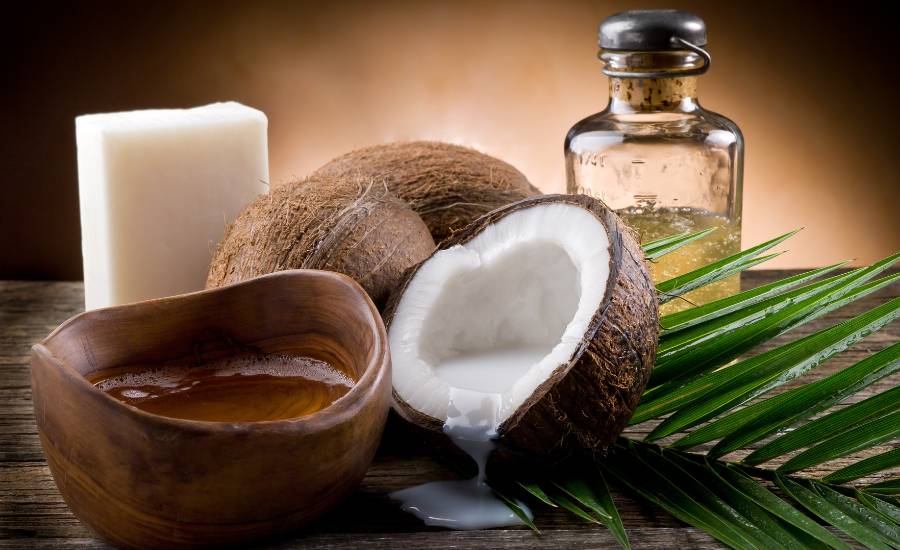
Coconut oil is one of the few plant oils capable of truly penetrating the hair fiber (and not just coating it). Its high lauric acid content allows it to bind to hair proteins and limit protein loss during washing. It strengthens, deeply nourishes, and forms a protective barrier against external aggressors. Ideal for thick, dry, and brittle hair. Use sparingly on fine or oily hair, as it can weigh it down.
Castor oil — to stimulate growth and volume
Castor oil is the gold standard for stimulating hair growth. Its high ricinoleic acid (omega-9) content stimulates scalp microcirculation, improves nutrient delivery to the hair follicles, and strengthens the roots. Its thick texture makes it particularly suitable as a scalp oil treatment, diluted with a lighter oil (jojoba, sweet almond) for easier application. For comprehensive advice on stimulating hair growth, our article "5 Tips to Promote Hair Growth" offers a complete routine.
Argan oil — for shine and protection
Nicknamed "Morocco's liquid gold," argan oil is particularly rich in vitamin E and unsaturated fatty acids (omega-6 and 9). It nourishes and regenerates the hair fiber, protects against UV rays, reduces split ends, and prevents hair loss caused by oxidative damage. Light and non-greasy, it is suitable for all hair types, including fine hair. It can be used as a pre-shampoo treatment or as a finishing touch to add shine and manageability without weighing hair down.
Avocado oil — for very dry and damaged hair
Avocado oil is one of the most nourishing oils available, thanks to its richness in monounsaturated fatty acids, vitamins E and B5, and lecithin. It penetrates deep into the hair fiber to restructure and strengthen it. Its antioxidants limit oxidative stress and protect hair follicles. It also fortifies the roots and balances the scalp. Ideal for very dry, colored, or chemically treated hair. To explore the many benefits of this oil beyond hair, our article "What are the benefits of avocado oil?" details them.
Sweet almond oil — for sensitive scalps
Sweet almond oil is the gentlest and most versatile of all plant-based hair oils. Rich in omega-6 and 9 fatty acids, vitamin E, magnesium, and phospholipids, it nourishes and protects the hair fiber while soothing irritated scalps (dandruff, itching, flakes). Its light texture is suitable for all hair types, from the finest to the thickest. It also makes an excellent diluent for essential oils used in hair care.
Jojoba oil — for oily and damaged hair
Technically a liquid wax (not an oil), jojoba has a composition very similar to the natural sebum produced by the scalp. This similarity gives it a unique property: it regulates sebum production while nourishing the hair fiber. Ideal for oily hair that tends to get greasy quickly. Its richness in vitamin E and omega-9 fatty acids also tightens the hair cuticles and improves shine. For advice on oily hair, our article "How to Get Rid of Oily Hair" offers a suitable routine.
How to use vegetable oils on hair?

Two modes of use are possible depending on the objective sought.
As a pre-shampoo oil treatment: apply a few drops to the lengths and ends of your hair, then massage into your scalp using circular motions for 3 to 5 minutes. This massage stimulates microcirculation and promotes oil penetration. Leave on for at least 30 minutes, ideally several hours (or even overnight) under a shower cap or a warmed towel—the heat opens the hair cuticles and improves penetration. Then rinse thoroughly with a gentle shampoo to remove all residue. A cold-pressed, organic vegetable oil retains all of its active ingredients and is recommended.
For finishing or styling: warm one or two drops between your palms and apply to the lengths and ends of your hair after drying. This minimal amount is enough to tame frizz, smooth the hair fiber, and add shine without weighing it down. To complement this treatment, our article on the best essential oils for hair will allow you to create targeted blends based on your specific needs.
The golden rule: always use these oils sparingly. Rich in active ingredients, they penetrate the hair fiber quickly. In excess, they weigh down and unnecessarily dull the hair.
Frequently asked questions about vegetable oils for hair
Can you use a vegetable oil every day?
As a finishing touch (one to two drops), it's suitable for most types of dry or thick hair. For an intensive oil treatment, once a week is sufficient. Daily use as an intensive treatment risks saturating the hair fiber and weighing down the hair, especially for fine or oily hair.
Which vegetable oil is best for curly hair?
Curly and frizzy hair tends to be drier because sebum has difficulty traveling down the curved shaft. Nourishing and penetrating oils are ideal: coconut oil (deep penetration), avocado oil (intense nourishment), and shea butter (curl definition) are the best choices. Jojoba oil, which is lighter, is also suitable for daily curl maintenance.
Should you rinse off vegetable oil before or after shampooing?
Always before. Vegetable oil is applied as a pre-shampoo treatment: it protects the hair fiber during washing and is then removed with shampoo. Applying oil after shampooing (on clean hair) is reserved for finishing touches, in very small quantities only on the ends.