
Chronic stress affects approximately one-third of the French population, and its effects on health—sleep disorders, muscle tension, irritability, and fatigue—are well-documented. Faced with these symptoms, CBD oil has emerged as one of the most sought-after natural products in recent years. But with the wide variety of formulas available on the market, how do you make the right choice? Here are the essential criteria to consider.
How does CBD oil work on stress?
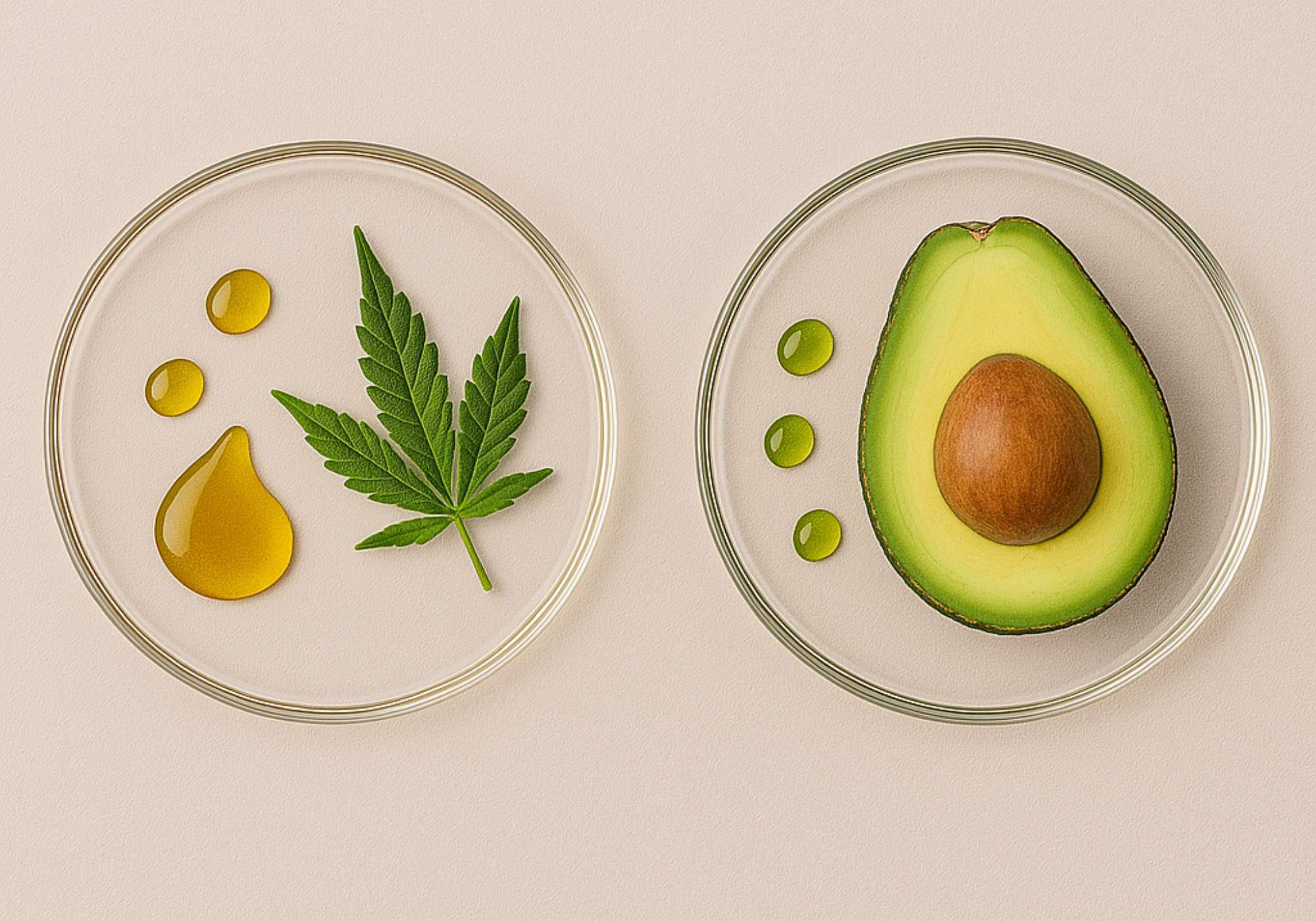
CBD oil is composed of a carrier oil (avocado, hemp, coconut) and extracts of cannabidiol (CBD), a natural molecule derived from the Cannabis sativa plant. CBD belongs to the cannabinoid family and acts on the endocannabinoid system , a network of receptors throughout the body involved in regulating stress, mood, pain, and sleep.
It is important to note that CBD is classified as a "Novel Food" in Europe: no official health claims have yet been validated by the relevant authorities. However, scientific research is progressing: a study published in 2012 in Neuropharmacology highlighted the calming effects of cannabidiol on the nervous system, emphasizing in particular its favorable safety profile compared to THC, which produces psychotropic effects and can lead to addiction.
In practice, many consumers use CBD oil to promote relaxation during the day or to help them fall asleep at night. To explore other complementary natural approaches, our article on the best anti-stress herbs presents other well-researched options.
Which CBD oil should I choose for stress?
The first selection criterion is the type of spectrum. In France, there are mainly two types:
- Full spectrum: the oil retains all the cannabinoids, terpenes, and flavonoids naturally present in the plant, including a trace of THC less than 0.3%. This composition promotes what researchers call the "entourage effect"—the synergy between the different components potentially amplifies the effects of CBD.
- Broad spectrum: a formula similar to full spectrum but completely free of THC. This is the preferred option for people subject to doping tests or wishing to avoid any contact with THC.
Whatever spectrum you choose, opt for a certified organic oil, derived from hemp grown without pesticides or chemical fertilizers, and whose composition has been verified by an independent laboratory (certificate of analysis available).
Which concentration should I choose?
CBD oils are available in several concentrations: 5%, 10%, 15%, 20%, and 30%. It's important to understand that the concentration doesn't determine the effectiveness, but rather the amount of product you need to consume . Five drops of a 20% oil contain the same amount of CBD as ten drops of a 10% oil. A higher concentration simply means you need fewer drops to achieve the same dose, making the bottle more economical to use.
For a first experience, a 10% oil is a good starting point. Those who already have an established tolerance or are looking for more pronounced effects can opt for 20% or 30%.
How to use CBD oil to promote relaxation?
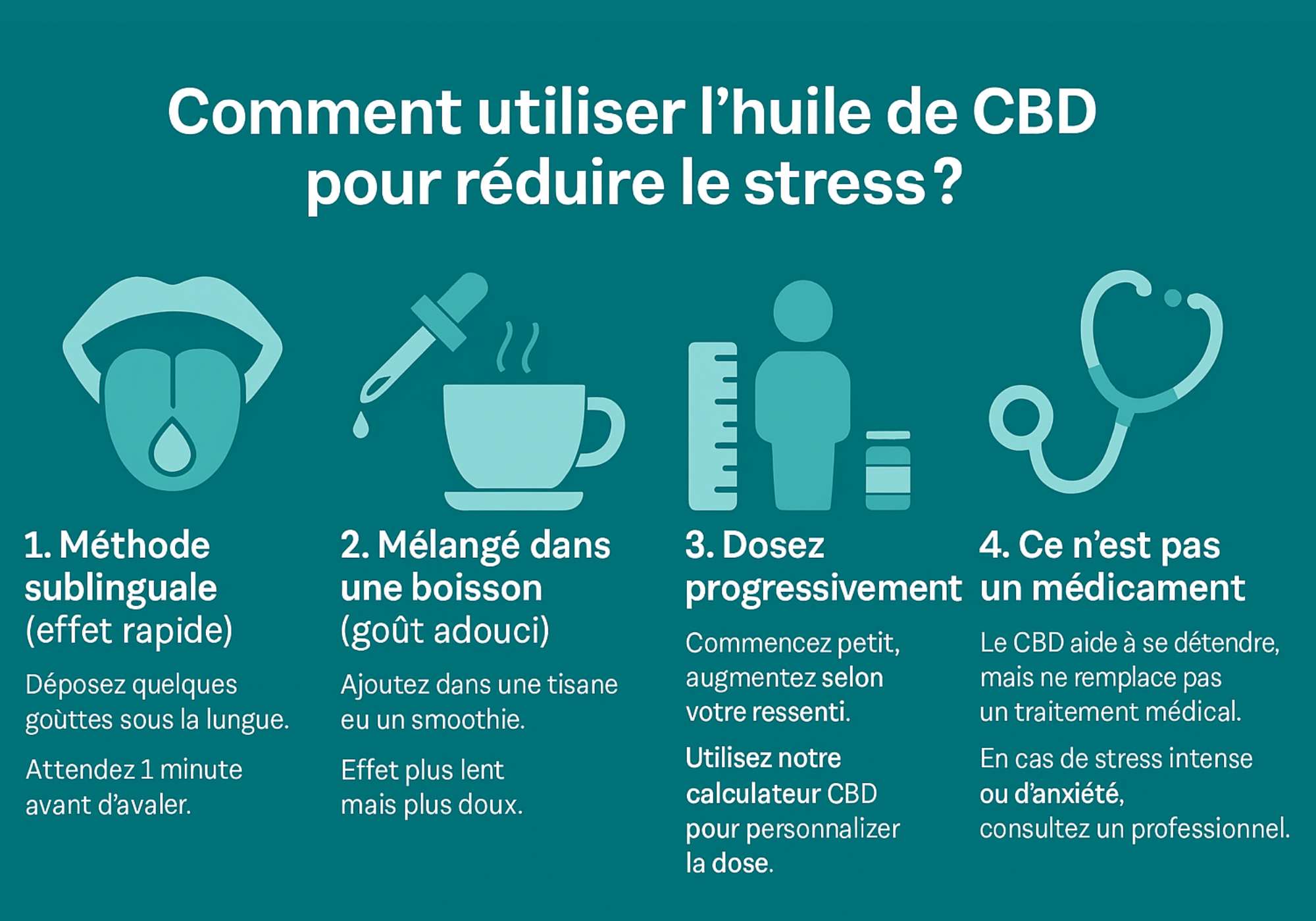
The sublingual route is the recommended method for rapid action. It involves placing the drops directly under the tongue using the dropper, holding the product in the mouth for about a minute, and then swallowing. The sublingual area is richly vascularized: the CBD enters the bloodstream directly without passing through the digestive system, which accelerates absorption and preserves the molecule's bioavailability. The effects are generally felt within 15 to 45 minutes.
It is also possible to incorporate the drops into a drink or food to mask the bitterness of cannabidiol, but absorption will then be slower (1 to 2 hours) and partial.
What dosage should I use?
There is no universal dosage: the response to CBD varies depending on weight, metabolism, and individual sensitivity. The recommended approach is gradual:
- Start with 5 to 10 mg of CBD per day (about 3 to 5 drops of a 10% oil).
- Maintain this dosage for 1 to 2 weeks while observing how you feel.
- Increase in increments of 5 mg every 3 to 4 days if necessary.
- Do not exceed 50 mg per day without medical advice.
If you are taking medication—especially blood thinners, antidepressants, or antiepileptics—consult your doctor before starting CBD: interactions have been documented. To delve deeper into the topic of daily stress, our guide on ways to relieve stress naturally complements this article.
CBD and stress: what are the complementary alternatives?
CBD oil yields better results when used as part of a holistic lifestyle. Heart coherence , practiced for 5 minutes three times a day, is one of the best-documented approaches to reducing chronic stress levels. Regular physical activity, sufficient sleep, and limiting stimulants (caffeine, alcohol) are also powerful tools. For individuals suffering from chronic anxiety , a medical consultation remains essential: CBD is not a substitute for appropriate treatment.
To learn more about the regulatory framework for CBD in France, ANSES publishes reference information on cannabidiol and its Novel Food status .
Frequently asked questions about CBD oil and stress
What is the best CBD oil for stress?
There is no one-size-fits-all answer. An organic, full-spectrum or broad-spectrum oil made from certified hemp and analyzed by an independent laboratory provides a solid foundation. The concentration depends on your experience: 10% to start, 20 to 30% for experienced users.
What time of day should I take CBD oil for stress?
CBD does not cause drowsiness at usual doses and can be taken at any time. Taking it in the morning helps you start the day more calmly; taking it in the evening promotes relaxation before bed. Many users split their dose into two daily intakes for a more stable effect.
How long before you feel the effects of CBD oil?
When taken sublingually, the effects are generally felt within 15 to 45 minutes. When ingested (mixed with food or a drink), the effects take 1 to 2 hours. The effects on chronic stress are assessed over several weeks of regular use rather than after a single dose.
Updated June 2026: As of May 15, 2026, CBD products intended for ingestion (oils, gummies, candies, infusions, food supplements) are no longer authorized for sale in France under the European Novel Food Regulation. An appeal is currently pending before the Council of State; this article will be updated depending on the outcome.
Sources
- Campos AC et al. (2012). Multiple mechanisms involved in the broad-spectrum therapeutic potential of cannabidiol in psychiatric disorders. Philosophical Transactions of the Royal Society B, 367(1607).
- ANSES. CBD (cannabidiol). anses.fr
- IFOP / MesBienfaits.fr (2022). The French and CBD.