
CBD oil isn't just for sublingual use. For those sensitive to its bitter taste or looking for different ways to consume it, adding it to food and drinks is a simple and delicious alternative. However, there are a few rules to follow to avoid degrading the cannabinoids and preserve the product's effectiveness.
Why cook with CBD oil?
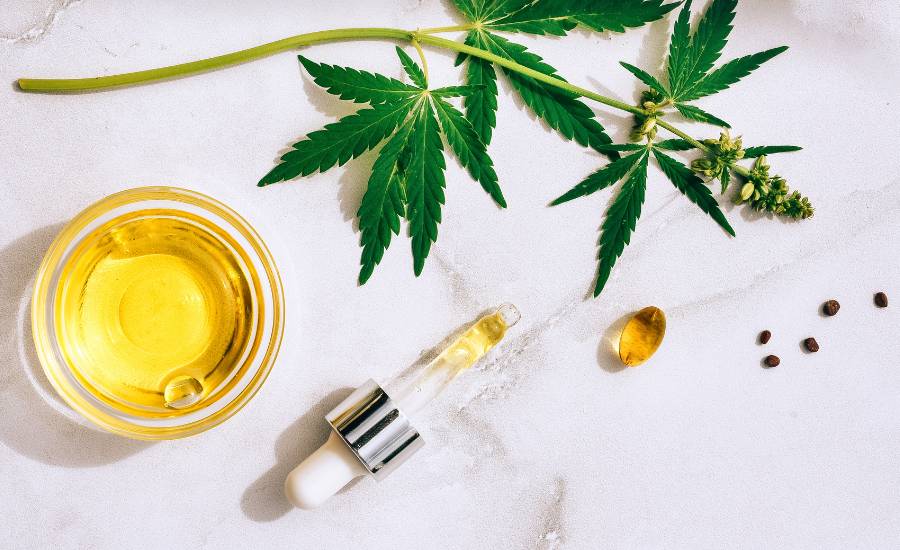
CBD oil contains cannabidiol, terpenes, and flavonoids, which sometimes give it a pronounced herbal taste that some consumers find unappealing. Incorporating it into a recipe can mask this flavor while still allowing you to benefit from its potential effects on relaxation and everyday well-being.
It's also a practical option for those who find it difficult to consume their oil on an empty stomach or who wish to integrate their CBD intake into an existing food ritual (morning coffee, lunchtime salad, evening herbal tea). Cuisines incorporating cannabis into food have a long history—the earliest mentions date back to ancient India, and the "edibles" trend gained popularity in the West in the 1960s before becoming widespread with the rise of legal CBD.
As a reminder, CBD is classified as a "Novel Food" in Europe and does not have any official health claims. Its use in cooking remains a personal, non-medical practice. To understand all the available methods of administration, our article "How to Consume CBD Oil" provides a complete overview.
The golden rule: never heat above 170°C
This is the most important point to remember. CBD, like the terpenes it contains, is a heat-sensitive molecule. Above 160-170°C, cannabinoids degrade and lose a large part of their properties. At very high temperatures (frying, searing in a pan over high heat), some compounds can transform into undesirable substances.
Practical rule: never use CBD oil as a direct cooking oil . It should always be added after cooking, as a finishing touch, or in cold preparations.
How to incorporate CBD oil into your recipes?
In cold dishes
This is the simplest and most effective use. A few drops of CBD oil can be easily incorporated into a salad dressing, hummus, guacamole, or cold sauce. Mixed with olive or sesame oil, it adds a subtle vegetal note without its flavor overpowering the dish. This method best preserves the cannabinoids.
In cold drinks
Smoothies, fruit juices, plant-based milks, and flavored waters easily incorporate a few drops of CBD oil. The texture and robust flavors of smoothies (berries, banana, spinach) perfectly mask the bitterness of cannabidiol. A few drops in a glass of lemon water is also an effective, minimalist option.
In hot drinks
Coffee, tea, herbal tea, hot milk: a few drops of CBD oil can be added, provided the beverage is below 70°C (158°F) when added. Wait a few minutes after pouring your drink before adding the oil. This is a pleasant way to incorporate CBD into your morning or evening routine. Relaxing herbal teas (lemon balm, valerian) pair particularly well with CBD oils designed for relaxation or sleep.
In cooked culinary preparations
For hot dishes (pasta, risotto, soup, stir-fried vegetables), add the CBD oil as a finishing touch, either directly onto the plate or drizzled over the dish once it's off the heat. Never add it to the pan or pot while cooking. For baked goods (cakes, muffins, muffins), CBD oil can be incorporated into the batter provided the baking temperature does not exceed 170°C (340°F) — which excludes most traditional pastries baked at 180-200°C (350-400°F).
A practical idea: prepare CBD butter by incorporating your drops of oil into softened (not melted) butter. This flavored butter can be kept in the refrigerator and spread on bread every morning or added to your dishes at the last minute.
How to dose CBD oil in cooking?
The bioavailability of ingested CBD (orally, in food) is lower than that of sublingual CBD: estimated between 6 and 19% compared to 20-35% sublingually. In practice, this means that a slightly higher dose is generally needed to obtain a comparable effect, and that the effects will take longer to appear (1 to 2 hours).
For those accustomed to sublingual administration, the same dosage can be used in cooking. For beginners, a gradual approach is recommended: start with 5 to 10 mg per dose and increase slowly. Do not exceed 50 mg per day without medical advice.
Important: Do not double the dose simply because you don't feel an immediate effect. Passage through the digestive system delays its action—wait at least 2 hours before assessing the effect and adjusting your dosage. For a detailed guide to calculating drops based on your oil's concentration, see our article "How Many Drops of CBD Oil to Take ."
Regarding the regulatory framework, ANSES publishes reference information on cannabidiol and its Novel Food status in France .
Frequently asked questions about CBD cooking
Can you fry food with CBD oil?
No. Frying requires temperatures of 170 to 190°C, which completely degrades cannabinoids and can generate undesirable compounds. CBD oil should always be added after cooking or to cold preparations.
Does CBD oil change the taste of food?
In small doses (5 to 10 drops), the impact on taste is minimal in most dishes. Its herbaceous and slightly bitter notes blend well into salad dressings, green smoothies, or sweet and savory preparations. In soft drinks or desserts, the taste may be more noticeable—red berry smoothies or chocolate preparations effectively mask it.
Is using CBD oil in cooking as effective as taking it sublingually?
No. The sublingual route remains the most effective in terms of bioavailability (20-35%) and speed of action (15-45 minutes). The oral route offers lower bioavailability (6-19%) and delayed but potentially longer-lasting effects (4-6 hours). CBD-infused cooking is a pleasant complementary option, not a substitute for sublingual administration for targeted therapeutic use.
Updated June 2026: As of May 15, 2026, CBD products intended for ingestion (oils, gummies, candies, infusions, food supplements) are no longer authorized for sale in France under the European Novel Food Regulation. An appeal is currently pending before the Council of State; this article will be updated depending on the outcome.
Sources
- Millar SA et al. (2019). A Systematic Review on the Pharmacokinetics of Cannabidiol in Humans. Frontiers in Pharmacology, 10:1365.
- ANSES. CBD (cannabidiol). anses.fr