
According to the French National Institute for Sleep and Vigilance, one in five French people suffers from insomnia. This disorder is characterized by a long time it takes to fall asleep, frequent awakenings during the night, early awakenings, or persistent fatigue upon waking despite sufficient sleep. Before resorting to sleeping pills, several natural remedies can effectively address the most common causes.
Insomnia: what are the causes?

Many factors can cause insomnia: noise, excessive light, high temperature, heavy meals, pain, or poor lifestyle habits. The primary factor remains stress. A state of stress or anxiety keeps the nervous system in alert mode and prevents the drop in body temperature necessary for falling asleep.
A distinction is made between acute insomnia, which is temporary and linked to a single event, and chronic insomnia, which persists for more than three weeks. The latter can have serious consequences for health and quality of life and warrants a medical consultation to identify the underlying causes.
Lifestyle habits to combat insomnia
Several daily adjustments may be enough to correct mild to moderate insomnia, without resorting to medication.
Regular sleep schedules are the most powerful tool: going to bed and waking up at the same time every day, including weekends, stabilizes the circadian rhythm and reinforces the sleep cues. The bedroom should be cool (16-18°C), dark, and quiet. Screens should be avoided in the hour before bedtime: blue light inhibits melatonin production and delays sleep onset.
Regular physical activity improves the quality of deep sleep, provided it is not done after 6 p.m. A light evening meal aids digestion and prevents the rise in body temperature that delays falling asleep. Caffeine and alcohol should be avoided at least six hours before bedtime.
Relaxation techniques play an important role. Abdominal breathing with equal time intervals (inhale for 5 seconds, exhale for 5 seconds, repeated 6 times) regulates the autonomic nervous system and reduces alertness. Meditation and progressive muscle relaxation are also well-documented for their effectiveness in treating insomnia. To explore these approaches further, our article on breathing techniques to improve sleep details the most effective methods.
Plants for insomnia
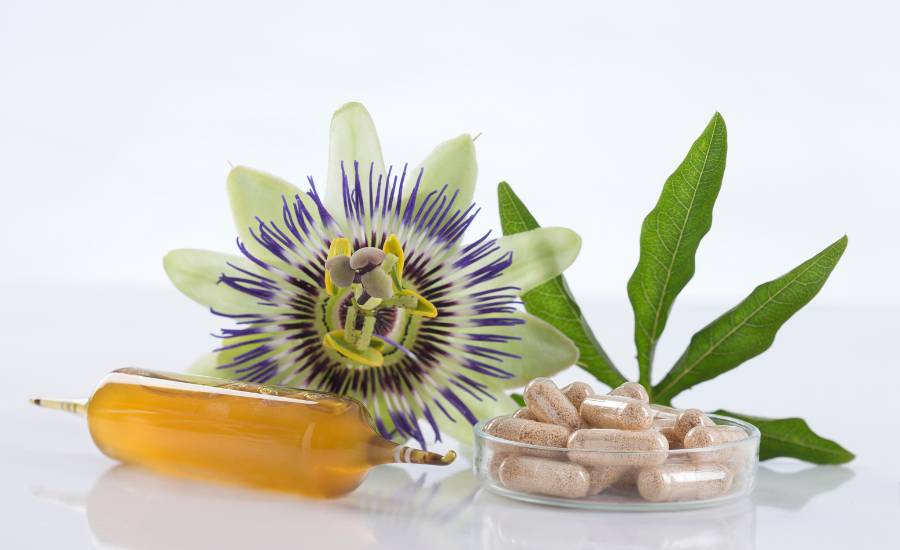
Several plants possess documented sedative properties and offer a natural alternative to chemical sleeping pills. Valerian is the most studied: it reduces the time it takes to fall asleep by modulating the action of GABA, the main inhibitory neurotransmitter in the nervous system. Passionflower and its flavonoids act on pre-sleep anxiety. Passionflower is particularly useful for insomnia related to rumination and nervous tension in the evening.
Lemon balm, chamomile, hops, linden, and poppy complete this list of sedative plants. They can be consumed as herbal teas, capsules, or standardized extracts. Our article on the best plants for sleep details the properties and methods of use of each.
Essential oils
Certain essential oils promote relaxation and sleep through inhalation. True lavender is the most well-documented: several clinical studies confirm its effect on reducing the time it takes to fall asleep and improving sleep quality. Roman chamomile, ylang-ylang, and bergamot also have interesting calming properties.
The most effective method of use is atmospheric diffusion: diffuse for 10 minutes in the bedroom, 30 minutes before bedtime. It is also possible to place 1 to 2 drops on the inside of your wrist or on a tissue and inhale for a few minutes. For a complete guide on this topic, our article on the best essential oils for sleep presents the most effective options and their precautions for use.
The anti-insomnia diet
Diet plays a direct role in sleep quality through melatonin synthesis. Tryptophan, an amino acid precursor to serotonin and melatonin, must be obtained through diet. It is found in good quantities in dairy products, white meats, legumes, cashews, and pumpkin seeds.
Meals high in fat or animal protein take longer to digest and raise body temperature, which delays sleep. Coffee, black tea, alcohol, and energy drinks should be avoided after 4 p.m. They can be replaced with herbal teas that promote melatonin . For a comprehensive approach to diet and sleep, our article on the ideal menu for a good night's sleep offers concrete examples.
Melatonin as a supplement
Melatonin is naturally produced by the pineal gland in response to darkness. Its production decreases with age and can be disrupted by excessive exposure to light in the evening. As a supplement, it is particularly effective in reducing the time it takes to fall asleep and resynchronizing the biological clock in cases of jet lag or irregular lifestyles. A dose of 0.5 to 1 mg taken 30 to 60 minutes before bedtime is generally sufficient.
These natural remedies are effective for mild to moderate insomnia. If symptoms persist beyond three weeks or worsen, a medical consultation is essential. Some natural remedies may also interact with medications: consult a healthcare professional if you have any doubts.
Frequently asked questions about natural remedies for insomnia
Which plant is most effective against insomnia?
Valerian is the most scientifically documented sedative herb for reducing sleep latency and improving sleep quality. It is often combined with lemon balm or hops to enhance its effects. Passionflower is preferable when insomnia is primarily related to anxiety and intrusive thoughts in the evening.
Do natural remedies work for chronic insomnia?
Natural remedies are effective for mild to moderate insomnia. For chronic insomnia (lasting more than three weeks), cognitive behavioral therapy for insomnia (CBT-I) is the standard treatment recommended by the French National Authority for Health (HAS), before any medication. Natural remedies can be used alongside CBT but do not replace it.
How to stop waking up at night naturally?
Frequent nighttime awakenings are often linked to a bedroom temperature that is too high, alcohol consumption in the evening, or chronic stress. Maintaining a bedroom temperature between 16 and 18°C, avoiding alcohol after 6 p.m., and practicing relaxation techniques before bed significantly reduce these awakenings. Valerian and passionflower can help stabilize sleep in the second half of the night.