
In France, nearly 20% of adults suffer from sleep apnea syndrome, according to data from Inserm. Many are unaware that these nighttime breathing interruptions occur without conscious awareness, but their health consequences are very real. While medical treatment remains essential in severe cases, several natural remedies can relieve symptoms and improve sleep quality, in addition to appropriate medication.
What is sleep apnea?
Sleep apnea is a nighttime breathing disorder characterized by pauses (apneas) or partial reductions (hypopneas) in airflow through the upper airways. These interruptions are most often caused by excessive relaxation of the throat muscles, which leads to the tongue and soft tissues falling back against the pharyngeal wall. Each episode can last from a few seconds to over a minute and sometimes occurs dozens of times per hour.
Severity is measured using the apnea-hypopnea index (AHI), established during a polysomnography. An AHI below 5 is considered normal; between 5 and 15, the apnea is mild; between 15 and 30, moderate; and above 30, severe. With each apnea, oxygen saturation drops, deep sleep is fragmented, and the heart is subjected to repeated stress. In the long term, this results in daytime sleepiness, morning headaches, difficulty concentrating, and an increased risk of cardiovascular disease.
There are three main types: obstructive sleep apnea (the most common, caused by a physical obstruction), central sleep apnea (related to a neurological signal defect), and mixed sleep apnea, which combines both. Natural remedies are primarily intended for mild to moderate cases, and as a complement to medical treatment for severe cases.
Breathing exercises to strengthen the airways
Several studies suggest that strengthening the upper airway muscles can reduce the frequency of apneas. Research published in the American Journal of Respiratory and Critical Care Medicine showed that oropharyngeal exercises performed daily for three months reduced the AHI by nearly 39% in patients with moderate apnea.
In practical terms, two techniques are accessible without equipment. Diaphragmatic breathing involves inhaling slowly through the nose, expanding the abdomen, then exhaling through the mouth while contracting the abdominal muscles, for 5 to 10 minutes before bedtime. It strengthens the diaphragm and reduces anxiety, two factors that worsen sleep apnea. Alternate nostril breathing , derived from yoga, alternates inhalation and exhalation through each nostril to balance oxygenation and induce a state of deep relaxation. More comprehensive techniques are detailed in our article on breathing techniques to improve sleep .
Sleeping on your side rather than on your back
This is one of the simplest and best-documented adjustments. When lying on your back, the tongue and soft tissues of the throat fall backward due to gravity, narrowing the airway. Sleeping on your side mechanically eliminates this phenomenon and can be enough to significantly reduce the number of apneas in people whose sleep apnea is positional, meaning it is only aggravated when lying on their back.
To maintain this position all night, a simple trick is to sew a tennis ball to the back of a t-shirt, making lying on your back uncomfortable. Positional pillows are also available to stabilize the body when sleeping on your side. Our guide to the best sleeping position details the options for different sleep patterns.
Relaxing plants and infusions
Sedative plants do not directly treat airway obstruction, but they act on sleep quality by reducing nighttime restlessness and promoting more peaceful sleep onset, which limits micro-awakenings related to apnea.
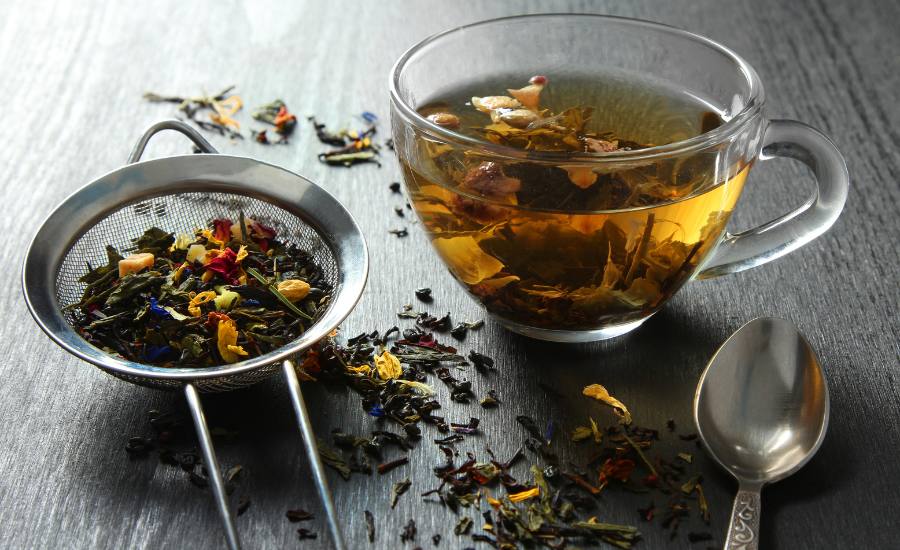
Valerian is the most studied: several clinical trials have shown an effect on sleep latency and subjective sleep quality. Chamomile soothes the nervous system via apigenin, a flavonoid that binds to GABA receptors. Passionflower and linden complete this picture by reducing anxiety and restlessness. An infusion prepared 30 to 60 minutes before bedtime is enough to prepare the body for rest. To learn more, our article on the best plants for a good night's sleep compares the available options.
Melatonin: regulating the biological clock
Melatonin is the hormone naturally secreted by the pineal gland in response to darkness. It doesn't directly induce sleep but synchronizes the circadian clock, making it easier to fall asleep and improving sleep continuity. A supplemental intake of 1 to 3 mg taken 30 minutes before bedtime can reduce the time it takes to fall asleep and limit nighttime awakenings, particularly in people with disrupted sleep patterns.
Formulas combining melatonin and relaxing plant extracts (passionflower, poppy, linden) act on several mechanisms simultaneously. Melatonin is available without a prescription in France for doses below 2 mg. Above this dose, a medical prescription is required.
Nasal irrigation with saline water
Nasal congestion is a frequently underestimated aggravating factor. When the nasal passages are blocked, resistance to airflow increases, which promotes nighttime mouth breathing and amplifies soft tissue vibrations that cause snoring and sleep apnea.
A daily rinse with an isotonic saline solution (one teaspoon of non-iodized salt per 250 ml of lukewarm water) mechanically clears nasal passages, reduces inflammation of the mucous membranes, and improves airflow. This practice is particularly helpful for people suffering from allergies or chronic congestion. Use a neti pot or a dedicated spray bottle, taking care to respect the proportions to avoid irritating the mucous membranes.
Lifestyle: the essentials not to neglect
Natural remedies are most effective when used within a suitable lifestyle. Being overweight is a major risk factor for obstructive sleep apnea: excess fatty tissue in the neck area compresses the airways. A 10% reduction in body weight can decrease the apnea-hypopnea index (AHI) by 26%, according to some studies. Regular physical activity, even moderate, improves both airway muscle tone and overall sleep quality.
Alcohol is particularly harmful: it excessively relaxes the throat muscles and worsens sleep apnea in a dose-dependent manner. Tobacco irritates and inflames the respiratory mucous membranes, increasing resistance to airflow. Avoiding these two substances in the evening is one of the most effective short-term measures. A cool bedroom (16 to 19°C), regular bedtimes, and controlled light exposure complete this picture.
Frequently asked questions about natural remedies for sleep apnea
Can natural remedies replace a CPAP machine?
No. For moderate to severe sleep apnea (AHI greater than 15), CPAP remains the gold standard treatment, effective and clinically validated. Natural remedies can complement this treatment or be sufficient for very mild cases, but they are not a substitute for medical care. A polysomnography diagnosis is essential before any therapeutic decision is made.
Does sport help against sleep apnea?
Yes, this has been documented. Regular physical activity reduces the apnea-hypopnea index (AHI) independently of weight loss, likely by improving overall muscle tone and reducing inflammation. Specific tongue and pharyngeal exercises (singing, didgeridoo, oropharyngeal exercises) have shown particularly promising results in several studies.
How can I tell if I have sleep apnea?
The most telling signs are loud and regular snoring, waking up with a feeling of suffocation, persistent daytime sleepiness despite sufficient sleep, and headaches upon waking. The diagnosis is confirmed by a respiratory polygraphy, which can be performed at home, or a polysomnography in a laboratory, both prescribed by a doctor.
Is lying on your side sufficient to treat sleep apnea?
In purely positional sleep apnea, where apneas occur only in the supine position, this measurement alone can normalize the AHI. However, most obstructive sleep apnea occurs in all positions. A polygraphy test in both positions can determine whether your apnea is positional or not.