
Breathing is much more than a simple biological reflex. In fact, it's a powerful tool for restoring inner balance, reducing stress, and enhancing our overall well-being. Every day, we breathe approximately 20,000 times, often without giving it a second thought. Yet, when we become aware of our breath and use it intentionally, it becomes a formidable ally in combating anxiety and improving our quality of life. In this article, we'll explore the power of breathing and present simple and effective exercises for instantly reducing stress .
Why is breathing so powerful?
Breathing is central to our autonomic nervous system, which regulates essential bodily functions such as heart rate and digestion. During periods of stress, our body switches into "fight-or-flight" mode (the acute stress response). This response releases hormones like adrenaline and cortisol, increasing heart rate, blood pressure, and muscle tension.
When we practice targeted breathing exercises, we stimulate the parasympathetic nervous system, which acts as a brake on this stress response. Our heart rate decreases, our blood pressure drops, and a feeling of calm gradually sets in. Even better, these exercises are accessible to everyone, require no special equipment, and can be done virtually anywhere, making them ideal for instant stress reduction .
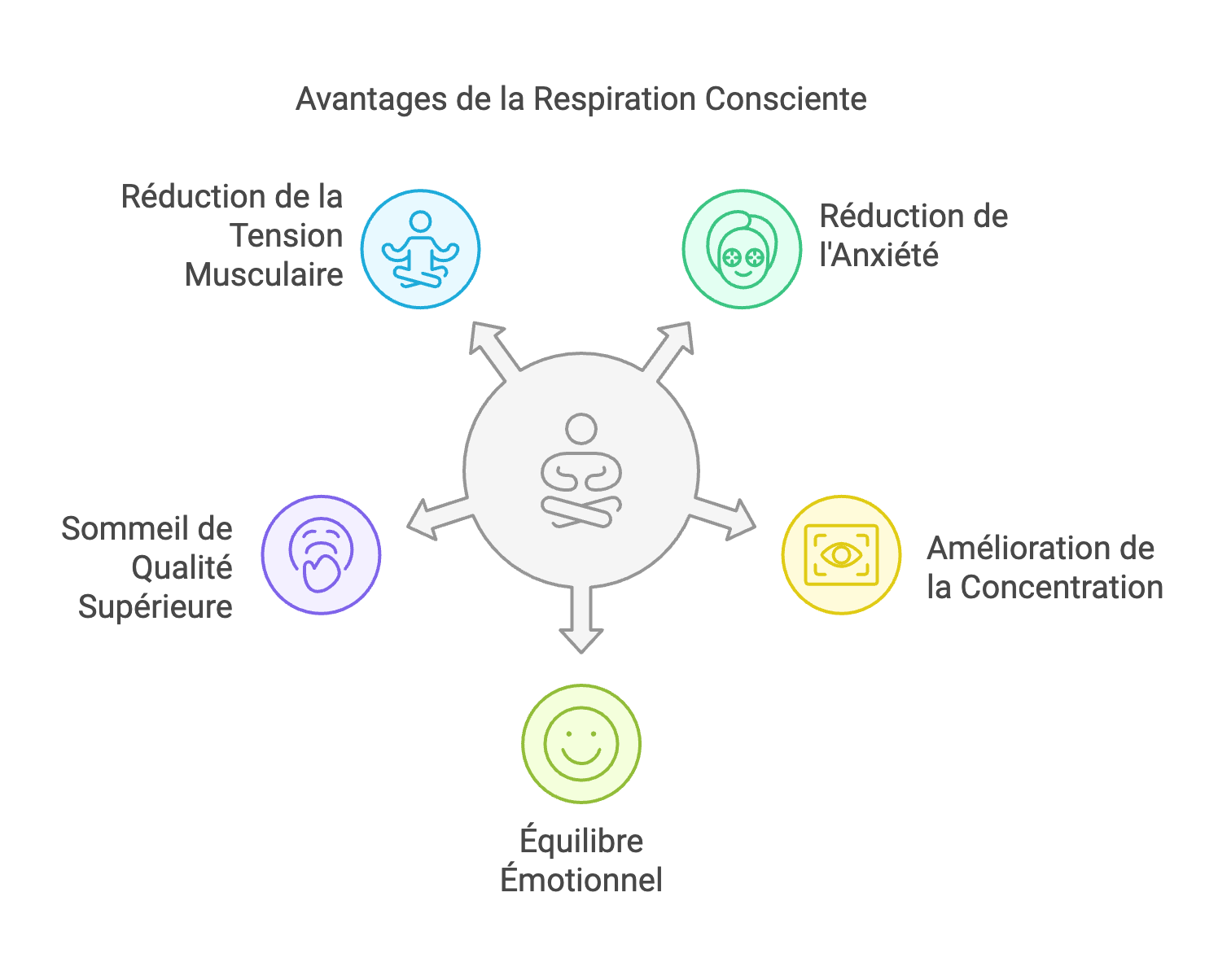
The General Benefits of Conscious Breathing
-
Anxiety and stress reduction
By allowing a return to calm, conscious breathing helps to quickly lower adrenaline levels and reduce the feeling of oppression associated with stress. -
Improved concentration
By focusing on your breath, you avoid mental distractions. This promotes mental clarity and daily productivity. -
Strengthening emotional balance
Regular and deep breathing positively influences moods and allows for better management of emotions, especially during times of crisis or overwork. -
Better quality sleep
Breathing exercises practiced before bedtime can help calm the mind and facilitate falling asleep. -
Reduction of muscle tension
Regular breathing helps to release tension accumulated in the body, particularly in the shoulders, neck and back.
3 Breathing Exercises to Instantly Reduce Stress
1. Diaphragmatic Breathing (Abdominal Breathing)
How to proceed?
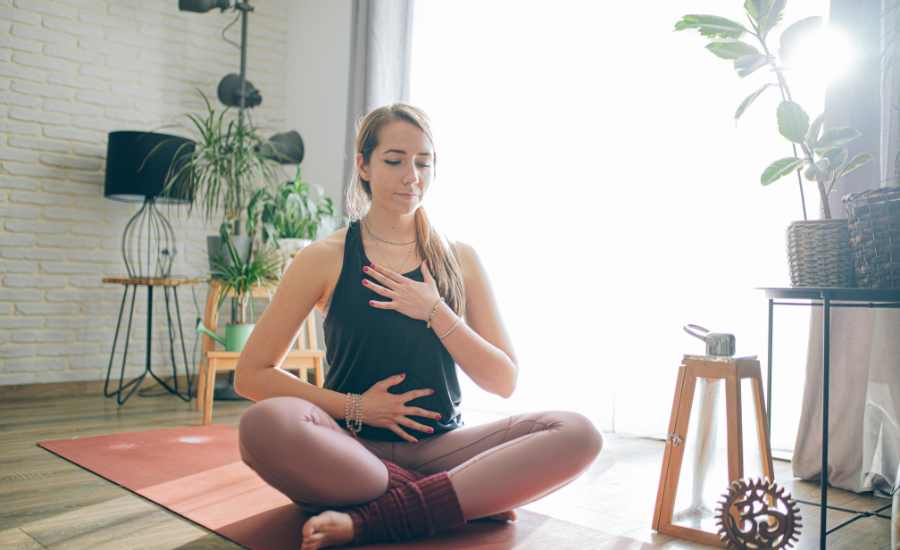
- Make yourself comfortable, sitting or lying down, with your back straight.
- Place one hand on your stomach and the other on your chest.
- Inhale slowly through your nose, inflating your belly like a balloon (your hand on your belly should rise).
- Exhale gently through your mouth while pulling your stomach in, as if you wanted to press your navel against your spine.
- Repeat this cycle for 5 to 10 minutes, making sure to maintain a calm and steady pace.
Why does it work?
By activating the diaphragm, this exercise stimulates the vagus nerve, one of the main regulators of the parasympathetic nervous system. The result: a rapid drop in heart rate and almost immediate overall relaxation.
2. Box Breathing
Also known as " square breathing ", box breathing is widely used by top athletes and special forces to manage pressure and stay focused .
How to proceed?
- Sit comfortably with your back straight and your feet firmly planted on the ground.
- Inhale through your nose while counting to 4.
- Hold your breath while counting to 4.
- Exhale through your mouth while counting to 4.
- Hold your breath for a final 4 seconds.
- Repeat the cycle for 1 to 2 minutes.
Why does it work?
Counting and pausing regularly helps focus your attention on the present moment. This technique limits mental distraction and significantly reduces nervous tension.

3. Alternate Nostril Breathing (Nadi Shodhana)
Originating from yogic tradition , alternate nostril breathing promotes balance and mental clarity . It helps realign energy in the body and instantly calm the mind.
How to proceed?
- Sit cross-legged or on a chair with your back straight.
- With your right hand, place your thumb on your right nostril and your ring finger on your left nostril.
- Plug your right nostril with your thumb and inhale slowly through your left nostril.
- Block your left nostril with your ring finger, open your right nostril and exhale through your right nostril.
- Now inhale through your right nostril, then close it with your thumb.
- Exhale through your left nostril.
- Repeat this sequence for 2 to 5 minutes.
Why does it work?
By alternating nostrils, you regulate the oxygen supply to each cerebral hemisphere. This practice balances the sympathetic and parasympathetic nervous systems, acting as a true "reset" for the mind and body.
Practical Tips to Optimize Your Breathing Sessions
- Choose a quiet place : Although these exercises can be done almost anywhere, finding a quiet space will make it easier for you to concentrate.
- Make yourself comfortable : The ideal position is sitting with your back straight and feet flat on the floor. You can also lie down, provided you keep your spine neutral.
- Breathe through your nose : Inhaling through your nose warms, filters and humidifies the air, which protects your respiratory tract.
- Be patient : Conscious breathing can take time to master. Regular practice is key to experiencing deep and lasting benefits.
- Listen to your body : If you feel dizzy or uncomfortable, return to natural breathing. It is important never to force it.
When to Practice Conscious Breathing?
- In the morning : A few minutes of deep breathing upon waking allows you to start the day with clarity and energy.
- At work : Take a breathing break when pressure rises or before an important meeting to instantly reduce stress .
- Before going to sleep : Incorporating a breathing exercise into your evening routine facilitates the transition to sleep.
- In case of crisis : When you feel overwhelmed by emotion, one or two minutes of controlled breathing may be enough to regain your calm.
To conclude
The power of breathing is often underestimated, yet it's a free, always-available, and particularly effective resource for instantly reducing stress . By taking a few moments each day to practice diaphragmatic breathing, box breathing, or alternate nostril breathing, you'll quickly notice positive changes in your sense of calm and well-being. These exercises not only reduce anxiety and muscle tension but also help improve mental clarity, concentration, and sleep quality.
Give yourself the gift of improved emotional and mental health with simple yet powerful breathing techniques. Your body and mind will thank you immensely. Starting today, take a few minutes to breathe consciously, and let this precious tool guide you to a state of serenity and balance. Breathing techniques can be complemented by herbal supplements, CBD in oil form, or… It is now commonly consumed for relaxation and receives excellent feedback from consumers.