
Sleep is not static throughout life. Its duration, structure, and quality change profoundly from birth to old age. Understanding these changes allows us to adapt our habits at each stage and to identify when a change in sleep is normal or a cause for concern.
Newborns and infants: sleep for development
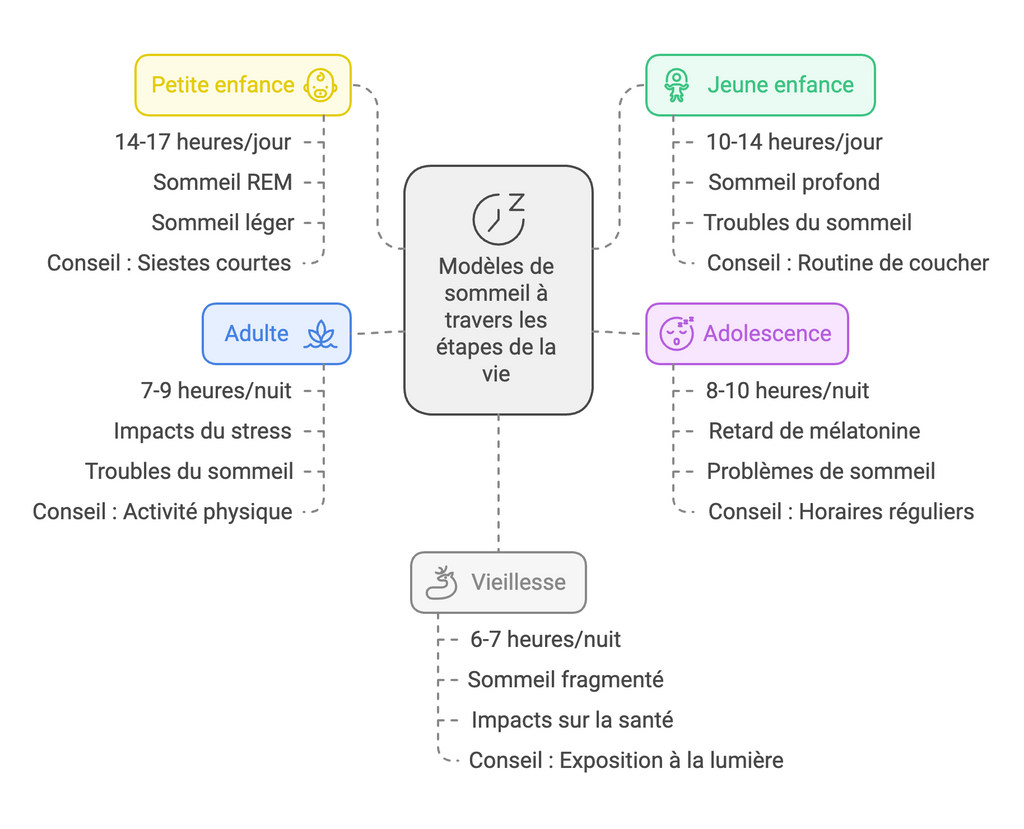
Newborns sleep 14 to 17 hours a day, in short 50-minute cycles interspersed with periods of wakefulness. Unlike adults, their sleep is very rich in REM sleep, essential for brain development and the consolidation of early sensory experiences. From 3 to 6 months, the circadian rhythm begins to structure itself under the influence of the day-night cycle: nights gradually lengthen and naps become more predictable.
Early childhood (1-5 years): growth and deep sleep
Young children need 10 to 14 hours of sleep per day. Deep sleep makes up a significant portion of their nights: it is during this phase that growth hormone secretion reaches its peak and the immune system strengthens. Disorders such as night terrors or separation anxiety can disrupt these nights. A soothing bedtime routine (reading, cuddles, a consistent ritual) helps the child associate bedtime with a feeling of security.
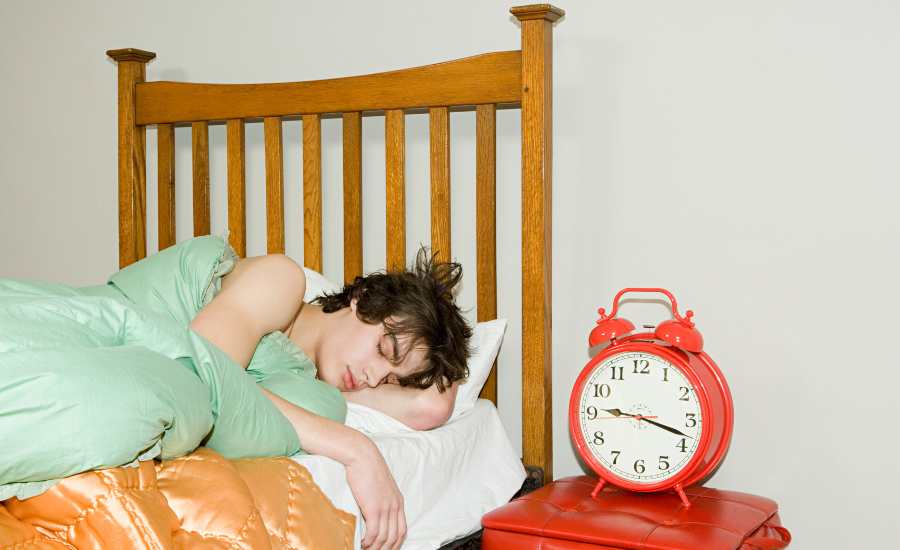
Adolescence: a biological shift, not laziness
Teenagers need 8 to 10 hours of sleep, but their biological clock undergoes a major hormonal shift. Melatonin production is delayed in the evening, which naturally postpones the urge to sleep and waking up. This phenomenon, called "delayed sleep phase," is physiological and not behavioral. Forcing excessively early school schedules creates a chronic sleep debt with documented consequences: decreased concentration, mood disorders, and an increased risk of depression and metabolic disorders.
Screen time in the evening exacerbates this sleep-wake cycle by inhibiting melatonin with its blue light. Limiting screen use after 9 p.m. is one of the most effective measures for teenagers. To understand why melatonin plays such a central role, our article on melatonin and sleep explains its mechanisms.

Adulthood (20-60 years): maintaining quality and quantity
Adults need 7 to 9 hours of sleep per night. The proportion of deep sleep gradually decreases compared to childhood, but remains sufficient for physical and cognitive recovery. The most frequent disturbances at this age are related to work and family stress, irregular schedules, and poor evening habits. The most common sleep disorders in adults are insomnia (related to anxiety or mental overload), sleep apnea, and restless legs syndrome.
Regular physical activity and stress management are the two most effective ways to preserve the quality of adult sleep. Our article on the benefits of sleep details why this period is critical for the prevention of cardiovascular and metabolic diseases.
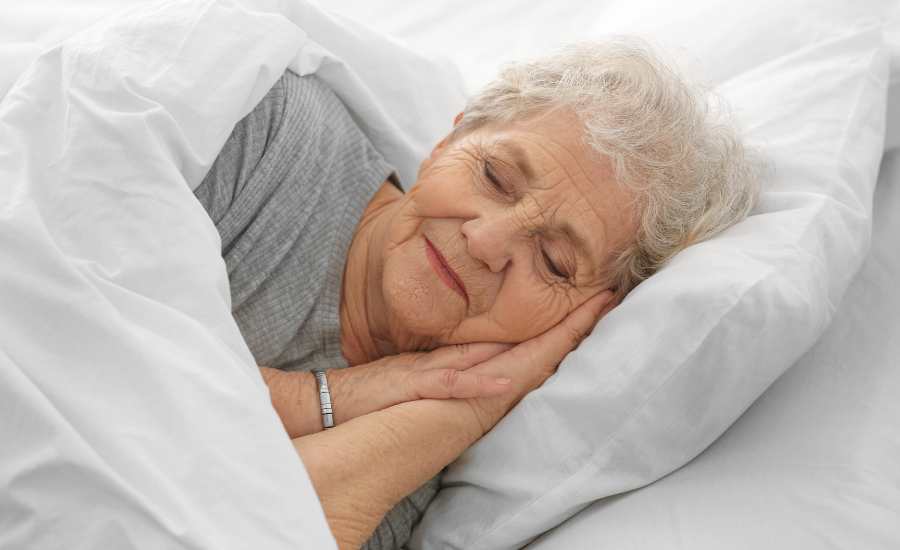
Older people (60 years and over): fragmented nights
After age 60, sleep cycles change significantly. Deep sleep decreases considerably and represents only a fraction of total sleep time. Nighttime awakenings become more frequent, often related to pain, the need to urinate, or sleep apnea. Older adults sleep an average of 6 to 7 hours per night, supplemented by daytime naps.
This lack of deep sleep has concrete consequences: less complete physical recovery, more fragile memory, reduced immunity, and an increased risk of cognitive decline. Studies link insufficient deep sleep to a more rapid accumulation of beta-amyloid proteins associated with Alzheimer's disease. Naps remain beneficial, provided they are limited to 20 to 30 minutes before 3 p.m. to avoid further fragmenting nighttime sleep. Our article on the benefits of napping specifies the appropriate durations according to age.
Summary table of sleep needs by age
10 tips for sleeping well at any age
Regardless of your age, these principles remain valid. Maintain consistent bedtimes and wake-up times, even on weekends. Create a dark, cool (16-18°C), and quiet bedroom. Turn off screens an hour before bedtime. Avoid caffeine and alcohol after 5 p.m. Eat a light dinner. Expose yourself to natural light in the morning to regulate your biological clock. Engage in physical activity during the day. Limit naps to 20 minutes before 3 p.m. Practice a relaxing activity before bed. Consult a doctor if sleep problems persist for more than three weeks. For a comprehensive program, our guide on how to sleep better naturally brings together all these approaches.
Frequently asked questions about sleep patterns
Is it normal to sleep less as you get older?
Yes, partially. Total sleep duration decreases slightly with age, and the proportion of deep sleep diminishes. However, the need for sleep does not disappear: it remains at 7 to 8 hours for most people over 65. Chronically insufficient sleep duration remains detrimental at any age.
Why do elderly people wake up so early?
Our biological clock advances with age: the sleep signal arrives earlier in the evening and the wake-up signal arrives earlier in the morning. This phenomenon, called "advanced sleep phase," is the opposite of the delayed sleep phase experienced during adolescence. Exposure to natural light in the late afternoon can help slightly delay this early awakening.
Can a lack of deep sleep in adults be compensated for?
The proportion of deep sleep naturally decreases with age, but can be preserved by regular physical activity (which increases slow-wave sleep), limiting alcohol (which reduces deep sleep even in small amounts), and maintaining a regular sleep schedule. Our article on the mechanisms of sleep explains why deep sleep is irreplaceable.