
Many medicinal plants, or those used for centuries in alternative medicine, are being rediscovered and increasingly repurposed for various uses. Their properties are becoming more widespread and disseminated across the globe. Among them, one stands out as a prime example: the goji berry.
The characteristics and properties of the goji berry
The goji berry ( Lycium barbarum ) is a plant native to China, sometimes called the "fruit of smiles" or "fruit of eternal youth," and has been used for millennia by local populations for its numerous properties and various medicinal virtues. In religious tradition, Taoist monks often used it and even prescribed it as a means to achieve immortality. However, it was only in the 1990s that it began to be cultivated in Europe, and in the 2000s that it truly became widespread.
In Europe and France, it is sold as dried fruit because its transport as a fresh fruit is prohibited outside its region of origin (China). Its caloric value is therefore extremely low due to this dehydrated state, at approximately 350 calories per 100g.
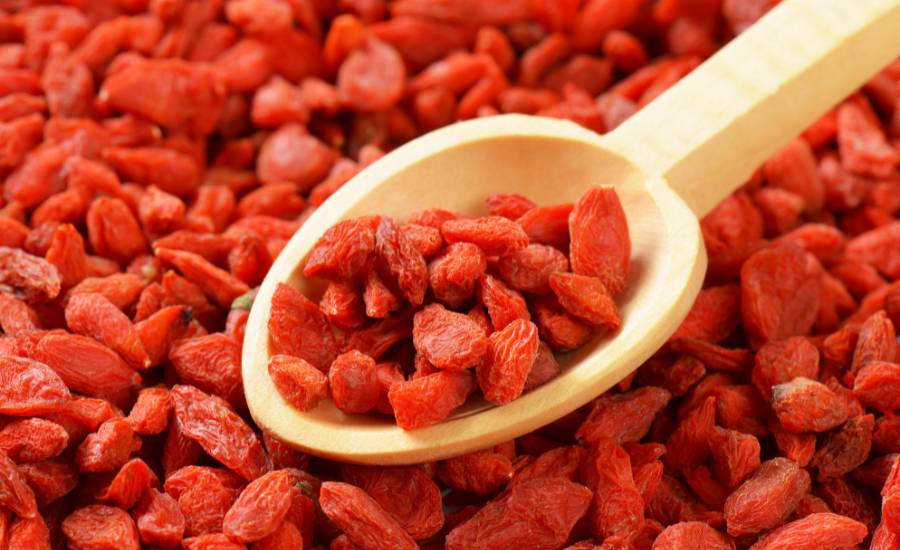
The benefits of goji berries
Goji berries possess an extraordinary antioxidant content. According to current scientists, they are the most antioxidant-rich plant (and therefore potentially the most antioxidant-rich food) in the world. This makes them an excellent remedy for combating free radicals, which are (among other things) the primary cause of aging and cell degeneration. In simpler terms, goji berries help maintain a youthful, vigorous body, minimizing the impact on the organism. The entire immune system is stimulated, and natural defenses are better prepared to resist attacks and infections. The skin is also rejuvenated, remaining more supple and smooth (anti-aging for cells). Cardiovascular diseases are prevented or slowed down, and goji berries also offer anti-inflammatory effects, liver protection, anti-tumor activity, blood sugar reduction, and cholesterol-lowering properties. Some scientists have also mentioned their potential to prevent eye disorders.
Goji berries also boast a very high quantity of vitamins and minerals (no fewer than 21 in total, including zinc, copper, selenium, phosphorus, calcium, germanium, etc.), a large amount of amino acids (18 in total, including tryptophan, isoleucine, etc.), flavonoids, phenolic acids, beta-sitosterols, polysaccharides, and more. In particular, they have a high vitamin C content, making them a particularly effective remedy against fatigue, partial weakness, or total exhaustion. The other vitamins help to combat minor deficiencies. The high calcium content can also be beneficial as a preventative measure, especially regarding the risk of osteoporosis. The high fiber and protein content makes them an excellent food source, serving as a remedy for nutritional deficiencies, particularly those associated with weight-loss diets.
Goji berries also possess benefits that can regulate cholesterol levels (in the body), blood sugar levels (glycemia), and blood pressure. They can also have a regenerative and detoxifying effect on cells, and purify the body.
Currently, goji berries are consumed as dried fruit, powder, or juice. The recommended quality is for goji berries labeled "Organic Farming," sourced from Southeast Asia. The only contraindication concerns pregnant and breastfeeding women, as goji berries can influence and stimulate the uterus. In rare cases of allergy, goji berries belong to the same family as tomatoes, peppers, eggplants, and potatoes (among others); therefore, caution is advised for those with allergies when first consuming goji berries.
Dietary supplements
Nowadays, many dietary supplements include a range containing goji berry extracts, especially those that attempt to preserve the body's immunity.