
Hair has a complex structure, made up of scales layered one on top of the other. When subjected to external aggressions, these scales weaken and eventually detach, revealing what are called "split ends" on the hair fiber.
What is a fork?
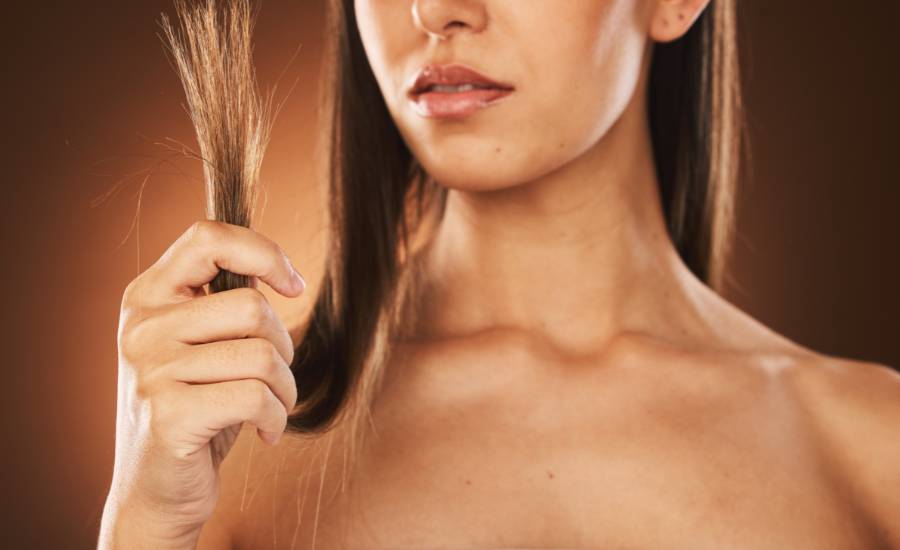
A split end is a visible deformation of the hair fiber. When it appears, the hair cuticle, its outer protective layer, opens and the fiber separates, much like the bark of a tree cracked by time. This phenomenon results from the aging of the oldest part of the hair: the ends.
Split ends can manifest in several forms: a splitting of the fiber into two or more branches, a visible white spot at the end of the hair, a creased or bent fiber at a right angle, or a knot along the length accompanied by a visible thinning of the tip.
People with long, dry hair or who are frequently exposed to heat are most likely to develop this type of split end.
What are the causes of split ends?
The causes of split ends are numerous and often result from a combination of physical, chemical, and nutritional aggressors. Repeated friction of the ends against clothing, nutritional deficiencies or lack of hydration, the use of unsuitable hair products, overly vigorous brushing, repeated coloring or bleaching, as well as the frequent use of heated styling tools (hair dryer, straightener, curling iron) are all factors that weaken the hair fiber.
Dry and dehydrated ends eventually crack under the effect of these cumulative aggressions: the fiber splits, and split ends gradually appear.

Can the forks be repaired?
Once a split end appears, it unfortunately cannot be permanently repaired. Since the hair fiber is made of dead keratin, there is no treatment that can permanently seal a split end. Some treatments may temporarily smooth the appearance of the split end on the surface, but the effect is usually short-lived.
The only truly effective solution is to trim the damaged ends to stop the split from spreading along the hair shaft. The longer you wait, the more the split ends tend to travel up the hair shaft, which can make the hair dull, brittle, and more difficult to style overall.
How to prevent split ends?
A few simple and regular steps can help you take care of your hair on a daily basis and limit the appearance of new split ends on the lengths.
Brush your hair gently
Brushing too vigorously weakens the lengths and ends of the hair. It's best to use a natural bristle or wooden brush, and to start detangling at the ends before gradually working your way up to the roots. This technique minimizes breakage and reduces split ends.
Limit the use of heating appliances
Excessive heat dries out the hair fiber and promotes breakage. Letting your hair air dry as often as possible, or using a low-temperature heat styling tool combined with a heat protectant, helps preserve the hair's natural structure.
Perform regular nourishing treatments
Regularly moisturizing and nourishing hair helps limit breakage. A weekly oil treatment (castor, coconut, argan) or a shea butter-based mask can help restore the lipid barrier of the hair fiber and give softness and suppleness to the lengths.
Trim your ends regularly
A light trim every three to four months is usually enough to maintain hair vitality and limit the formation of new split ends. It can also restore lightness to the hair and promote better visible growth by removing the most fragile ends.
Adjusting your diet
Hair health depends in part on nutritional intake. A diet sufficiently rich in protein, essential fatty acids, zinc, and biotin (vitamin B8) contributes to the proper functioning of keratinization. Hair fibers that are well-nourished from within tend to be stronger and less prone to split ends over time.
Precautions
In the event of very numerous split ends despite these precautions, or if the entire head of hair appears particularly dry and brittle, it may be useful to consult a hairdresser or dermatologist to assess the general condition of the hair fiber and adapt the care routine.
Frequently asked questions about forks
Do anti-split end treatments really work?
Some treatments can temporarily smooth the appearance of split ends, but no product can permanently repair a split hair fiber. A haircut remains the only definitive solution.
How often should you trim your ends to avoid split ends?
A light trim every three to four months is generally recommended to limit the appearance and progression of split ends, especially on long hair.
Why do my hairs get split ends even though I take good care of them?
Split ends can appear even with regular care, especially with frequent heat exposure, repeated coloring, or naturally dry hair. In these cases, boosting hydration and limiting heat damage can help slow their development.