

Motivation, drive, reward, learning and concentration: dopamine is involved in many of the mechanisms that shape our everyday behaviour. It is often called the “pleasure hormone” or “happiness chemical”, but these expressions are somewhat misleading. Dopamine does not simply make us happy: it helps the brain identify what deserves our attention, learn from experience and motivate us to pursue a goal.
It also plays an essential role in movement. This is one of the reasons Parkinson’s disease, which progressively affects certain dopamine-producing neurons, causes characteristic motor symptoms. Understanding dopamine therefore means looking far beyond the simple idea of pleasure.
What exactly is dopamine?
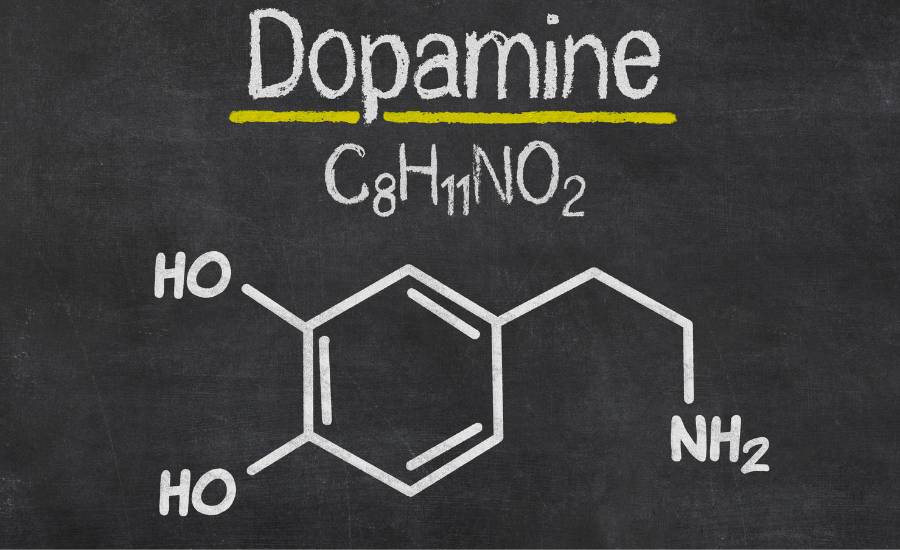
Dopamine is primarily a neurotransmitter, a chemical messenger used by nerve cells to communicate with one another. The body produces it from tyrosine, an amino acid naturally found in many protein-rich foods.
In the brain, certain groups of neurons produce dopamine and release it to transmit signals to other cells. Dopamine then binds to different types of dopamine receptors. Its effects therefore vary depending on the area of the brain involved and the receptors receiving the signal.
This is precisely why reducing dopamine to a “happiness chemical” is misleading. The same neurotransmitter is involved in motivation, learning, decision-making, reward processing and movement.
What does dopamine do?
Dopamine operates through several pathways in the brain. One of the best known is the reward system, which helps us learn that a particular action may lead to something desirable or rewarding.
Imagine completing a difficult task, receiving good news, improving at a sport or discovering a food you really enjoy. The brain gradually learns to associate certain situations and actions with their outcomes. Dopamine participates in this learning process and can encourage us to repeat behaviours associated with a worthwhile result.
It is also involved in our willingness to make an effort. Knowing that a reward is available is not enough: the brain also has to decide whether that reward is worth the time and energy required to obtain it. This helps explain the close relationship between dopamine and motivation.
Dopamine and motivation
Dopamine appears to play a particularly important role in wanting and pursuing a reward, rather than simply enjoying it once it has been obtained. It helps give an objective value, directs attention towards it and supports the effort required to reach it.
This does not mean that feeling unmotivated automatically means having “low dopamine”. Poor sleep, prolonged stress, exhaustion and many other factors can reduce our desire to act. When lack of motivation is accompanied by persistent tiredness, our guide on how to combat fatigue explores some of the most common causes and practical ways to regain energy.
Dopamine and learning
The brain does not respond only to the reward itself. It also learns to anticipate what is about to happen. An unexpected positive outcome may produce a particularly strong learning signal, while a reward that becomes completely predictable is processed differently over time.
This mechanism helps us adjust our behaviour according to experience. It also explains why certain cues — a notification, a smell, a song or even a particular place — can eventually trigger a strong desire for something we have learned to associate with them.
Dopamine and movement
Another essential function of dopamine is movement control. Some dopamine pathways help the brain initiate, coordinate and regulate movement correctly. This role receives less attention than the reward system, but it is fundamental to normal brain function.
Why is dopamine called the “pleasure hormone”?
The expression comes from dopamine’s strong involvement in the brain circuits activated by rewards. Eating something we enjoy, receiving good news, having a pleasant social interaction or reaching an important goal can all engage these pathways.
However, saying that dopamine simply “creates pleasure” is too simplistic. Research increasingly distinguishes between the pleasure of liking something and the motivation to want it. Dopamine is particularly important in this second dimension: anticipation, motivation and the attraction of a possible reward.
This distinction is easy to recognise in everyday life. We may strongly want to check another notification, watch another short video or repeat an activity even when the pleasure we eventually get from it is relatively small. The reward system can help maintain this desire to keep seeking the next reward.
What is the difference between dopamine and serotonin?
Dopamine and serotonin are often described as the two “happiness chemicals”. In reality, both are neurotransmitters involved in a wide variety of functions.
Dopamine is particularly involved in motivation, reward, learning and movement. Serotonin contributes to the regulation of mood, sleep, appetite and numerous other physiological processes.
It is therefore inaccurate to imagine a simple division in which dopamine represents instant pleasure while serotonin represents long-term happiness. Both systems interact with many other neurotransmitters, and their effects depend heavily on the brain regions involved.
What are the signs of low dopamine?
“Low dopamine symptoms” is a common search, particularly among people who feel unmotivated, tired or less interested in activities they normally enjoy. These experiences can involve brain pathways in which dopamine plays a role, but they do not reveal how much dopamine is actually present in the brain.
Reduced motivation, apathy, loss of interest and difficulty making an effort can occur when reward and motivation systems are functioning differently. But the same symptoms can also result from poor sleep, prolonged stress, depression, exhaustion, certain medications or other health issues.
Feeling unmotivated for a few days therefore does not mean that your brain has “run out of dopamine”. When low energy and lack of interest persist, looking at the broader causes is usually far more useful than trying to artificially boost a single neurotransmitter.

What is the link between dopamine and Parkinson’s disease?
Parkinson’s disease provides one of the clearest examples of dopamine’s importance in controlling movement. One of the main features of the disease is the progressive loss of neurons in a brain region called the substantia nigra. These cells produce dopamine and form part of the pathways that regulate movement.
As these neurons are lost, dopamine signalling decreases in certain areas of the brain. This contributes to characteristic symptoms such as slowness of movement, stiffness and tremor.
Several treatments for Parkinson’s disease therefore aim to restore or improve dopamine signalling. Readers who want to explore the neurological mechanisms in greater depth can consult the National Institute of Neurological Disorders and Stroke.
Dopamine and addiction: what is the connection?
The dopamine system plays a major role in addiction. Certain drugs, including cocaine and amphetamines, produce particularly powerful changes in dopamine signalling within reward pathways.
With repetition, the brain also learns to associate certain cues with a substance or behaviour. A place, a person, an emotion or a particular situation may eventually trigger a strong urge. Dopamine participates in this learning process and in the increasing importance given to those cues.
This does not mean that dopamine itself causes addiction. Addiction is much more complex and involves learning, habits, environment, individual vulnerability and long-term changes in the brain. Dopamine is nevertheless one of the central systems involved.

How can you increase dopamine naturally?
There is no switch that can permanently “boost dopamine” on demand. However, several habits that support overall brain health can naturally support the systems involved in motivation, reward and energy.
Exercise regularly
Physical activity influences several neurotransmitter systems and can gradually improve energy, mood and motivation. These benefits do not come from dopamine alone: exercise, sleep, stress regulation and the sense of making progress all interact.
There is no need to exercise at an extreme intensity. Brisk walking, cycling, swimming, dancing or any activity enjoyable enough to practise regularly can provide a solid foundation.
Set achievable goals
The reward system responds to progress as well as final results. Breaking a large goal into smaller steps creates more frequent experiences of achievement and can make it easier to maintain motivation.
This is often more effective than waiting passively to “feel motivated again”. Starting with one very simple action can sometimes be enough to restart momentum.
Get enough sleep
An exhausted brain performs less effectively in many areas, including attention, decision-making and motivation. Restoring a reasonably regular sleep pattern may therefore do far more for daily drive than searching for a food or supplement marketed as a dopamine booster.
If stress or racing thoughts make it difficult to switch off at night, our guide to natural ways to fall asleep more easily covers several practical strategies for improving the transition to sleep.
Eat enough protein
Dopamine is produced from tyrosine, an amino acid found in many protein-rich foods. Eggs, dairy products, meat, fish, legumes, soy, nuts and seeds all contribute amino acids used by the body.
This does not mean that eating extra tyrosine automatically creates a surge in dopamine and motivation. With a varied diet, the brain regulates the production and use of its neurotransmitters through much more complex mechanisms.
Reduce chronic stress
Occasional stress can be stimulating, but when tension becomes constant, sleep, attention, energy and motivation often begin to suffer. Creating periods without constant stimulation, exercising regularly and protecting sleep can help restore a healthier balance.
For more ideas, our guide to natural ways to reduce stress explores practical strategies that can be incorporated into everyday life.
Which foods support dopamine production?
Lists of “dopamine foods” are everywhere online, but the expression can be misleading. Eating a particular food does not directly deliver a dose of dopamine to the brain.
A diet containing enough protein does, however, provide the amino acids required to produce dopamine, including phenylalanine and tyrosine. Eggs, fish, poultry, dairy products, legumes, tofu, nuts and seeds are all good sources of protein.
Rather than focusing on one supposed dopamine-boosting superfood, a varied diet that provides enough energy, protein and micronutrients is far more useful for supporting normal brain function.
Does a “dopamine detox” really work?
The idea of a dopamine detox has become extremely popular. It usually involves temporarily avoiding social media, video games, sweets, streaming and other sources of quick gratification in an attempt to “reset” the brain.
Dopamine cannot actually be switched off. It is essential for normal brain function, so spending a day away from your smartphone does not empty your brain of dopamine or magically reset its receptors.
The practical idea behind the trend can still be useful. Temporarily reducing notifications, endless scrolling and other highly automatic habits can create more room for activities that provide less immediate stimulation, such as reading, working on a long-term project, walking or simply spending a little time without constant input.
Any benefit therefore comes primarily from changing habits and reclaiming attention rather than from literally “detoxifying” dopamine.
Can you measure your dopamine level?
There is no routine blood test that can tell you whether you have a “good dopamine level in the brain”. Dopamine activity within the central nervous system cannot be accurately represented by a simple measurement of dopamine circulating in the blood.
Tests for catecholamines and some of their metabolites do exist in medicine, but they are used for specific clinical purposes. They are not a way of determining whether someone who feels unmotivated has a dopamine deficiency in the brain.
Frequently asked questions about dopamine
Is dopamine the happiness hormone?
It is a popular nickname, but not a very accurate one. Dopamine is primarily a neurotransmitter involved in motivation, learning, reward and movement. It participates in pleasurable experiences without being solely responsible for happiness.
How do you know if you have low dopamine?
There is no single symptom that allows you to diagnose low dopamine yourself. Apathy, low motivation, tiredness and loss of interest can involve dopamine pathways, but they can also have many other causes.
What releases the most dopamine?
Dopamine pathways respond to many types of reward and, importantly, to cues that predict them. Enjoyable food, social interaction, sex, reaching a goal and certain psychoactive substances can all alter dopamine signalling, although with very different intensity and consequences.
Does exercise increase dopamine?
Physical activity influences several neurotransmitter systems, including dopamine pathways. Its positive effects on mood, energy and motivation result from many interacting mechanisms rather than from a simple isolated dopamine spike after every workout.
Does coffee increase dopamine?
Caffeine works mainly by blocking adenosine receptors, which temporarily increases alertness. It also indirectly influences some dopamine pathways. Coffee can therefore make you feel more awake and ready to act in the short term, but it does not correct a supposed dopamine deficiency.
What is the difference between dopamine and pleasure?
Dopamine appears to play a particularly important role in desire, motivation and learning associated with rewards. Pleasure itself depends on several brain systems. It is therefore possible to strongly want something without the pleasure eventually obtained being proportional to the desire.
Dopamine: much more than a pleasure chemical
Dopamine became famous as the brain’s “pleasure chemical”, but its role is much broader. It helps us learn from experience, assign importance to goals, mobilise effort to pursue them and control movement.
Rather than constantly looking for ways to “boost dopamine”, it makes more sense to support the factors that allow these systems to work normally: good sleep, regular physical activity, adequate nutrition, stimulating goals and a healthy balance between immediate rewards and activities that require sustained effort. It is this dynamic regulation, rather than a hypothetical perfect dopamine level, that makes the neurotransmitter so important.