
Whether it's intensive training or regular exercise, physical exertion generates micro-tears in the muscles, inflammation, and pain that can slow recovery. More and more athletes, both amateur and professional, are interested in natural solutions to optimize their recovery. CBD is among the most explored options in recent years. Here's what science knows today and how to intelligently integrate it into your training.
Is CBD permitted in sports?
This is the first question athletes ask when subjected to doping controls. The answer is clear: CBD is permitted in sports . The World Anti-Doping Agency (WADA) removed cannabidiol from its list of prohibited substances in 2018. The World Health Organization (WHO) confirmed in its 2017 report that CBD is neither a doping product nor a narcotic, and poses no health risks.
Only THC remains prohibited in competition. CBD products legally sold in France contain less than 0.3% THC, well below the doping detection threshold. For athletes subject to strict controls, broad-spectrum oils (0% THC certified by an independent laboratory) offer the maximum guarantee.
What are the effects of CBD for athletes?
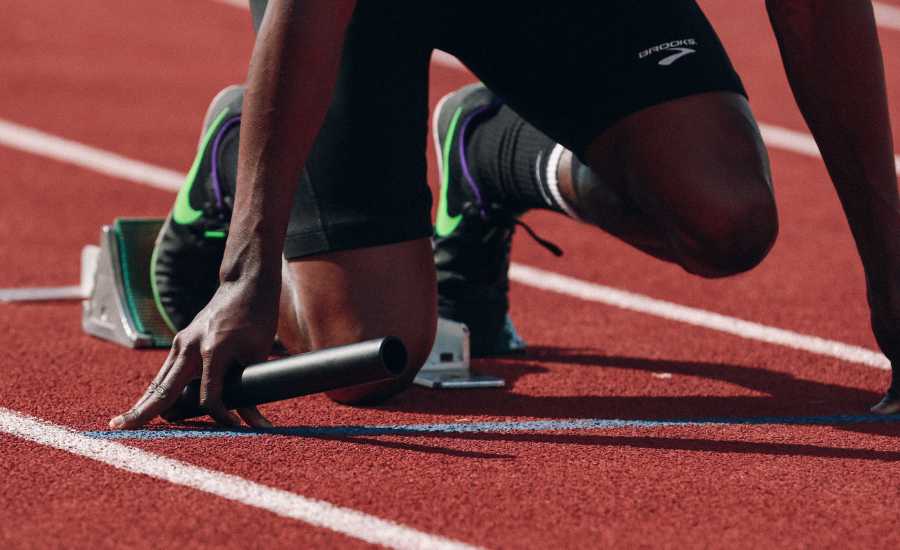
CBD acts via the endocannabinoid system, whose CB1 and CB2 receptors are present in muscles, joints, the nervous system, and immune cells. Several mechanisms are relevant in the context of sports.
Before training: managing stress and concentration
Pre-competition stress and performance anxiety are factors that can negatively impact athletic performance. CBD, through its action on 5-HT1A serotonergic receptors, may help reduce anxiety without causing drowsiness at usual doses. For additional stress management techniques before exercise, our article on anti-stress breathing techniques offers practical exercises.
Post-workout: muscle recovery and anti-inflammatory
CBD shows the most documented benefit in post-workout recovery. A review published in Frontiers in Physiology (2020) indicates that CBD may reduce inflammatory markers (pro-inflammatory cytokines) generated by intense physical exertion, thus accelerating muscle recovery. Its action on CB2 receptors in muscle and joint tissues could alleviate muscle soreness and post-exercise inflammation.
A study published in Cannabis and Cannabinoid Research (2018) confirms the analgesic and anti-inflammatory potential of CBD for musculoskeletal pain, without the adverse effects of prolonged use of nonsteroidal anti-inflammatory drugs (NSAIDs). For specific joint pain common among athletes, our article on CBD and joint pain explores this topic in more detail.
Sleep and overall recovery
Sleep quality is one of the cornerstones of athletic recovery. Preliminary studies suggest that CBD, by modulating sleep-wake cycles via endocannabinoid receptors, could improve the quality and duration of deep sleep, a phase essential for muscle repair and growth hormone secretion. Our article on natural remedies for better sleep provides a useful complement to this topic.
How to use CBD oil in sports practice?
Sublingual CBD oil is the most suitable form for athletes: it's quickly absorbed (15 to 45 minutes), easy to dose, and contains no calories or added sugars. A few drops placed under the tongue and held for 60 seconds before swallowing allow for direct absorption into the bloodstream.
For local application to a painful area (knee, shoulder, calf), direct topical application effectively complements sublingual administration by targeting peripheral receptors. Formulas enriched with bay laurel (a recognized analgesic for muscle and joint pain) and peppermint essential oil (with a cooling and surface anesthetic effect appreciated by athletes) are particularly suitable.
When should I take CBD around my workout?
- Before exercise : 30 to 60 minutes before training for stress management and mental preparation. Choose a moderate dose (5 to 15 mg) to avoid any sedative effects.
- Post-exercise : within an hour of training to support muscle recovery and reduce inflammation. This is the most relevant time for athletes looking to reduce muscle soreness.
- In the evening : to optimize the quality of restorative sleep.
Dosage
Start with 10 to 15 mg of CBD per day and gradually adjust according to how you feel. For intense workouts, doses between 20 and 40 mg are commonly used by athletes in available studies. Do not exceed 50 mg daily without medical advice. If you are taking medication (anti-inflammatories, pain relievers), consult your doctor before starting CBD.
To learn more about the criteria for choosing a quality oil, our article which CBD oil to choose details the essential points to check (organic certification, spectrum, independent laboratory).
Regarding the regulatory and scientific framework, ANSES publishes reference information on cannabidiol and its status in France .
Frequently asked questions about CBD and sports
Does CBD improve athletic performance?
CBD is not a stimulant and does not directly improve physical performance (strength, speed, endurance). Its main benefit for athletes lies in recovery (reducing inflammation, managing pain), improving sleep quality, and managing pre-competition stress. Better recovery indirectly leads to optimized long-term performance.
Can CBD replace conventional anti-inflammatories (ibuprofen) after exercise?
No, CBD is not a substitute for anti-inflammatory medication in cases of injury or significant inflammation. It can be a complementary approach for mild to moderate exercise-related pain, with a generally favorable tolerability profile for regular use. In case of injury, consult a sports medicine physician.
Is CBD detected during a doping test?
CBD itself is not tested for in doping controls and is not prohibited by WADA. Only THC is prohibited in competition. For athletes subject to strict controls, it is essential to choose a broad-spectrum oil certified as 0% THC by an independent laboratory, and keep the certificate of analysis.
Updated June 2026: As of May 15, 2026, CBD products intended for ingestion (oils, gummies, candies, infusions, food supplements) are no longer authorized for sale in France under the European Novel Food Regulation. An appeal is currently pending before the Council of State; this article will be updated depending on the outcome.
Sources
- Vučković S. et al. (2018). Cannabinoids and Pain: New Insights From Old Molecules. Frontiers in Pharmacology, 9:1259.
- McCartney D. et al. (2020). Cannabidiol and Sports Performance. Sports Medicine Open.
- WHO (2017). Cannabidiol (CBD) Critical Review Report. who.int
- AMA (2018). Prohibited List — Cannabidiol removed. wada-ama.org
- ANSES. CBD (cannabidiol). anses.fr