
Nails are much more than just an aesthetic detail. Their color, texture, thickness, and any deformities are true indicators of overall health. Doctors and dermatologists routinely examine them during consultations, as certain signs can point to internal pathologies, nutritional deficiencies, or infections. Here's how to interpret them.
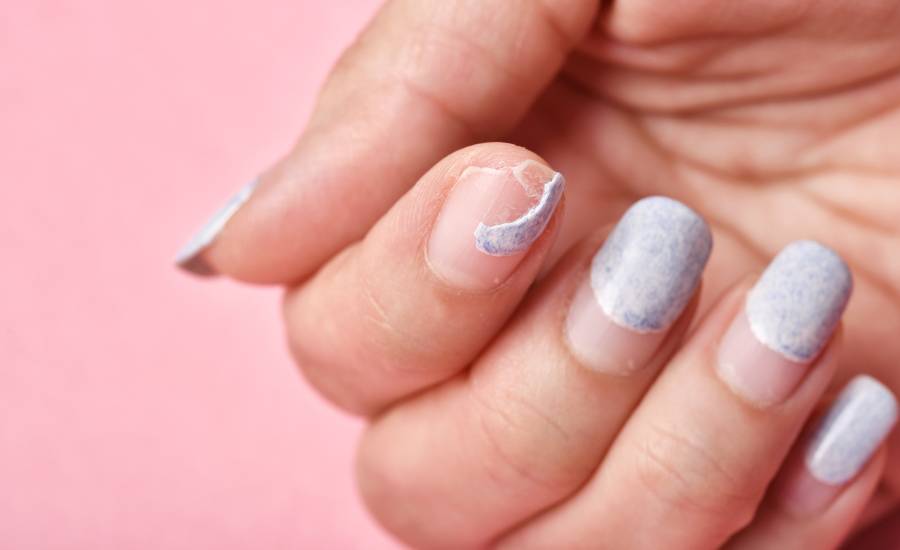
Color changes and what they signal
A healthy nail has a uniform pink color, with a whitish lunula at the base. Any deviation from this standard warrants attention.
Yellow nails are the most common sign. They can result from prolonged use of nail polish without a protective base coat, heavy tobacco use, or a fungal nail infection. In the latter case, the nail is often thickened and brittle in addition to being discolored. A dermatological consultation is recommended to distinguish simple discoloration from a fungal infection requiring topical or systemic antifungal treatment.
White nails with spots or diffuse discoloration may suggest anemia, liver disease, or repetitive microtrauma. Small, isolated white spots are usually benign and due to minor impacts that temporarily disrupt keratinization.
Blue or purple nails generally indicate poor blood oxygenation, either due to exposure to cold and vasoconstriction, or to a circulatory or respiratory disorder. Persistent cyanosis of the nails without exposure to cold should be medically evaluated.
Black nails with a dark, longitudinal band or spot require prompt medical attention. While a subungual hematoma following an impact is benign and resolves on its own, a spontaneously appearing black band may be a sign of nail melanoma, a rare but serious tumor treated like skin cancer.
Red, splinter-like spots (small linear hemorrhages) under the nail may indicate infective endocarditis or vascular disease. Redness accompanied by swelling around the nail fold suggests paronychia (infection), lupus, or another connective tissue disorder.
Surface deformations and anomalies
The shape and surface of the nails are just as informative as their color.
Watch glass nails (domed, curved downwards like an inverted spoon) develop gradually in cases of chronic oxygen deficiency in the blood, often linked to lung disease (chronic obstructive pulmonary disease, fibrosis) or heart disease. A sudden deformation in this direction should raise concern.
Spoon nails (koilonychia), which are concave in the center and curl up at the edges, are classically associated with severe iron deficiency or hypothyroidism.
Fine longitudinal ridges are often benign and naturally become more pronounced with age. Deeper ridges may indicate iron deficiency, dehydration, or hormonal changes such as menopause. Beau's lines, horizontal grooves across the nail, mark a temporary interruption of nail growth following severe stress, acute illness, or chemotherapy.
Brittle, fragile nails are common and rarely serious. The most frequent causes are repeated exposure to water and detergents, excessive use of acetone-based nail polishes and removers, a deficiency in biotin (vitamin B8) or iron, or hypothyroidism. An article dedicated to natural remedies for brittle nails details practical solutions.
Nutritional deficiencies visible on the nails
Nails are composed primarily of keratin, a protein whose synthesis depends on numerous micronutrients. Their condition therefore directly reflects nutritional balance over the last 3 to 6 months, which is the complete renewal time of a nail.
Iron deficiency results in pale nails that are longitudinally ridged or spoon-shaped. Zinc deficiency causes white spots and increased brittleness. Biotin (vitamin B8) deficiency is associated with brittle, thin nails, and it is one of the few deficiencies for which supplementation has shown a measurable effect on nail strength in clinical studies. Vitamin B12 or magnesium deficiency can manifest as vertical cracks.
Horizontal white lines (Muehrcke lines) suggest a protein deficiency or hypoalbuminemia. Hollow horizontal lines may indicate a risk of glycemic imbalance.
How to take care of your nails on a daily basis
Once the signs are identified, a few simple steps can help preserve and restore nail health. Avoiding nail biting is essential: this habit creates micro-lesions that facilitate viral and bacterial infections. Regularly trimming nails, straight across for toenails (to prevent ingrown nails) and slightly rounded for fingernails, strengthens their structure.
Protection against chemical aggressors is essential: wear gloves when handling household products, leave several weeks between manicures, and always use a protective base coat. Daily hydration with a hypoallergenic nourishing cream limits dehydration, the main cause of fragility in people without underlying medical conditions.
Once a week, a massage with a vegetable oil (castor, argan, jojoba) deeply nourishes the nail matrix. These same vegetable oils are also effective for hair. Nutritionally, a varied diet that meets the needs for protein, iron, zinc, and B vitamins is the best way to prevent nail deficiencies. In cases of confirmed deficiency, targeted supplementation can complement the diet, ideally after consulting a doctor.
For general information on nail health and when to consult, the Health Insurance website offers resources accessible to all.
Frequently asked questions about nails and health
Are white spots on the nails serious?
In the vast majority of cases, no. Small, isolated white spots (punctate leukonychia) result from microtrauma and disappear as the nail grows out. However, a diffuse white discoloration affecting several nails may suggest a zinc deficiency or liver disease and warrants a medical evaluation.
What nutrients should I take for stronger nails?
Biotin (vitamin B8) is the nutrient with the best-documented effect on nail strength: studies have shown improved nail thickness and hardness after six months of supplementation at 2.5 mg per day. Iron, zinc, and protein also play an important structural role. Our article on how to have beautiful nails details complementary approaches.
When should you see a doctor about your nails?
If a black band or spot appears without trauma, if nails deform rapidly, if there is persistent pain or inflammation of the nail fold, or if there is thick yellow discoloration with brittleness, these signs may indicate an infection, an internal condition, or, rarely, a tumor that requires prompt medical attention.