
What is CBD?
For the past few years we have seen products containing this mysterious abbreviation popping up everywhere, but what does this term mean?
CBD stands for cannabidiol, a molecule belonging to the cannabinoid family, found primarily in the flowers of the hemp plant. It is the second most studied cannabinoid after THC. Unlike THC, CBD has no intoxicating effect and therefore does not cause physical dependence . This is why CBD is not classified as a narcotic. CBD is completely legal . It does not produce intoxicating effects, addiction, or other notable side effects . CBD is now prescribed medically in many countries for its anti-inflammatory, pain-relieving, analgesic, antidepressant, anxiolytic, antiepileptic, and anti-insomnia, nausea, and vomiting properties. But where does this molecule come from, and how does it act on our bodies?
A bit of history:
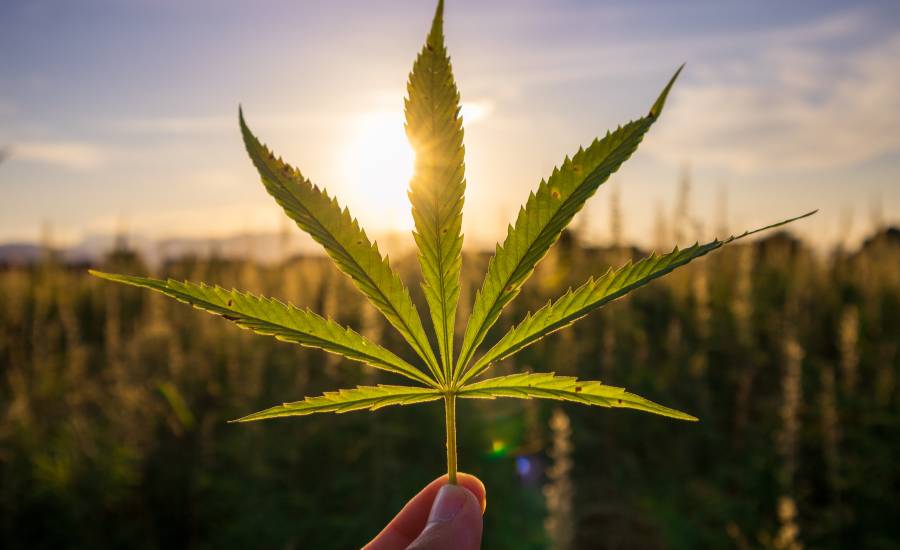
CBD comes from the hemp plant, also known as cannabis. Hemp ( Cannabis sativa subsp. sativa ), sometimes called industrial hemp, agricultural hemp, or textile hemp, is a plant originally from Asia and has been used by humans since the Neolithic period for its numerous properties. As early as 600 BC, the Chinese used it for many purposes, before it became widely used in India. Hemp cultivation is therefore centuries old and is found in a wide range of sectors, from food processing and textiles to cosmetics, construction materials (composite materials), insulation (soundproofing, thermal insulation), papermaking, and dietary supplements, among others.
France is also the leading hemp grower in Europe, with thousands of hectares cultivated each year by farmers.
The use of hemp is generally misunderstood because hemp often has a very bad reputation due to confusion with hashish (which is a resin from female hemp flowers) that contains cannabinoids ( THC concentration) and therefore produces psychotropic effects (psychotropic substance). Depending on the country, its use (generally for smoking or in infusions) is prohibited, although the global trend (since the 2000s) has been moving towards gradual legalization (medical cannabis). It was in the United States, in 1940, that the American researcher Roger Adams succeeded in isolating the CBD molecule for the first time. It was only decades later, in 1963, that Raphael Mechoulam, an organic chemist and professor at the Hebrew University of Jerusalem, managed to discover the exact molecular structure of CBD.
What are the effects of CBD?
Since the discovery of this molecule, several studies have been conducted. These studies have demonstrated the effects of CBD on numerous areas of action, but as this molecule does not have authorized claims in France, we cannot discuss it further.
A study published in 2017 highlights CBD's ability to restore homeostasis in the human body; the various homeostatic processes maintain water, oxygen, pH and blood sugar levels, as well as body temperature.
According to another study published in 2019 (https://pubmed.ncbi.nlm.nih.gov/30157131/), CBD may also promote the production of serotonin, more commonly known as the "happiness hormone." Serotonin is an essential hormone in our body; it regulates mood, stress, and sleep. This study highlights the modulation of serotonergic transmission, as well as the suppression of allodynia and anxious behavior in cases of neuropathic pain, by cannabidiol.
How does CBD work?
Like all cannabinoids, CBD influences the endocannabinoid system.
The endocannabinoid system (or ECS) is a vast network of receptors that we all possess; it is a system of cannabinoid membrane receptors CB1 and CB2, endogenous ligands called endocannabinoids, and enzymes (proteins that activate or accelerate a chemical reaction) responsible for the synthesis and degradation of these molecules.
These receptors are located in many places in our body: central nervous system, lungs, bones, spleen, skin, vascular system, muscles, immune system, liver, pancreas…
The endocannabinoid system (ECS) plays far too many roles to list. Its role in managing stress responses, neuronal plasticity , emotion regulation , appetite control , and lipogenesis is particularly noteworthy, as is its involvement in cardiovascular function and fat cell formation. It participates in managing stress responses at the hormonal level (adrenaline and corticosterone secretion) and in controlling inflammation and immune cell activity.
—