
Washed in the morning, greasy by the end of the day—for many, oily hair is a source of daily frustration. Yet, the solution doesn't lie in washing it more often: in fact, that's usually the approach that worsens the problem. Understanding the mechanisms of sebum production is the key to a lasting solution.
Why does hair become oily?

Sebum is a lipid substance naturally produced by the sebaceous glands located at the base of each hair follicle. In normal quantities, it is beneficial: it forms a protective film that waterproofs the hair shaft, protects it from external aggressors, and maintains its elasticity. The problem arises when this production becomes excessive.
The causes of excess sebum production are numerous. Genetics plays a major role. Hormonal fluctuations (adolescence, pregnancy, thyroid imbalances) stimulate the sebaceous glands. Chronic stress, by increasing cortisol levels, also activates them. A diet too rich in refined sugars and saturated fats can worsen seborrhea. Finally—and this is the most common pitfall—shampoos that are too harsh, containing aggressive sulfates, completely remove the protective lipid film, causing the scalp to overcompensate by producing even more sebum. The result: the more you wash, the faster it gets greasy.
According to the French National Health Insurance, a very unbalanced sebaceous production may indicate seborrheic dermatitis, a dermatological condition sometimes requiring specific medical treatment.
What products should I use for oily hair?
Shampoo: less often, gentler
The goal is to gradually retrain the scalp by spacing out washes. Ideally, aim for a maximum of one to two washes per week. This transition requires several weeks of patience—hair may seem even oilier at first—but after this adjustment period, it will stay fresh much longer.
Choose a gentle shampoo, free of sulfates (SLS, SLES), silicones, and parabens. While these ingredients create a rich lather, they disrupt the sebaceous balance and can lead to dependency. Enhance your shampoo with a few drops of tea tree essential oil (antifungal, purifying), true lavender essential oil (rebalancing), or cineole rosemary essential oil (purifying, circulation-stimulating). To learn more about the best essential oils for different hair concerns, our article on the best essential oils for hair details their uses.
Dry shampoo can be used as a temporary fix between regular washes, two to three times maximum. Beyond that, it can clog pores and paradoxically worsen seborrhea.
Conditioner: on the lengths only
Hair that's oily at the roots often has dry lengths and ends—and it shouldn't skip conditioner. The golden rule: apply to the mid-lengths and ends only, never to the roots or scalp. Rinse thoroughly with lukewarm water, then finish with a cold water rinse to close the cuticles and add shine without leaving a greasy residue.
Vegetable oils: an effective paradox
Applying oil to oily hair might seem counterintuitive. However, some plant oils naturally regulate sebum by signaling to the scalp that it doesn't need to produce more. Jojoba oil is the gold standard: technically a liquid wax whose molecular structure mimics human sebum, it rebalances sebum production without leaving hair greasy. Hazelnut oil and black seed oil also have purifying and regulating properties. Apply them with a gentle massage to the scalp (5 minutes), leave them on for 30 minutes to overnight, then rinse thoroughly with two shampoos if necessary. For a complete comparison of plant oils suited to each hair type, see our article on the best plant oils for hair .
Daily habits to space out washes
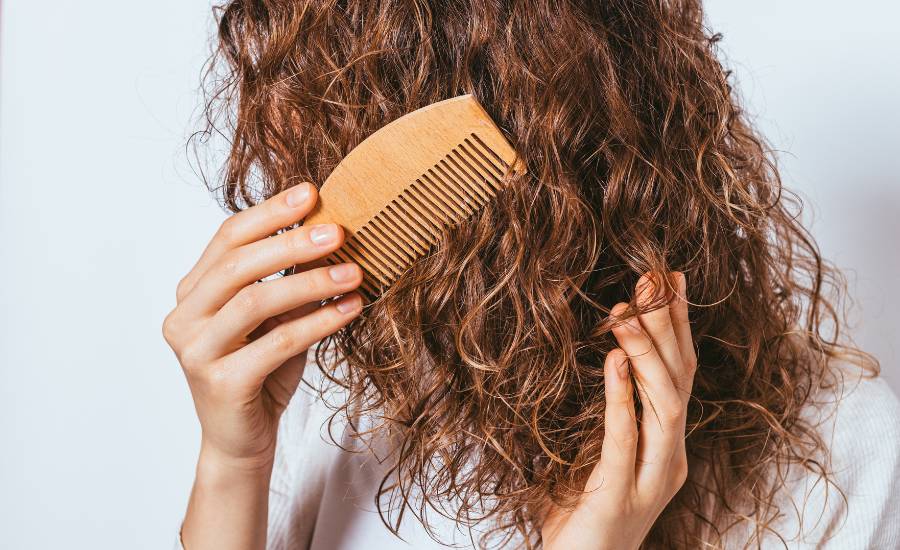
Beyond the products, your daily habits directly influence the speed at which your hair gets greasy again.
Avoid constantly touching your hair: each time you pass your hands over it, sebum and bacteria are transferred from your palms to your scalp. This is one of the most damaging and unconscious habits you can make.
Limit excessive brushing: vigorous brushing mechanically stimulates the sebaceous glands and distributes sebum from the roots to the lengths of the hair. Twice a day with a natural bristle brush is more than enough.
Change your pillowcase regularly: night after night, your pillowcase accumulates sebum, sweat, and product residue. Change it two to three times a week if you have very oily hair.
Avoid using heated styling tools on dirty hair: the heat "cooks" the sebum in the hair fiber, creating a sticky film that is difficult to remove. Use them only on freshly washed hair.
Rinse with cold water: the final rinse with cool water tightens the cuticles, tightens the pores of the scalp and reduces compensatory sebum production.
Diet: an often underestimated internal factor
What you eat is directly reflected on your scalp, usually 48 to 72 hours after ingestion. Refined sugars and high-glycemic-index foods (sodas, pastries, white bread) cause insulin spikes that stimulate the production of androgens, hormones that activate the sebaceous glands. Excess saturated fats overload the body with lipids that it tries to eliminate through the scalp.
Conversely, certain nutrients naturally regulate sebum production: vitamin B6 (bananas, poultry, chickpeas) regulates hormonal balance; zinc (oysters, pumpkin seeds, lentils) normalizes the activity of the sebaceous glands; and omega-3 fatty acids (sardines, walnuts, flax seeds) reduce systemic inflammation. To learn more about the role of zinc in hair health, our article on the health benefits of zinc details its action. Proper hydration (1.5 to 2 liters of water per day) also helps the body eliminate toxins and reduces compensatory sebum production.
Clever hairstyles for tough days
While your scalp recovers its balance, several hairstyles can help camouflage the shine: cornrows or braids, a slightly messy high bun (sebum adds texture and hold, making styling easier), a headband or hairband positioned near the forehead, or a turban-style scarf. A high bun is particularly well-suited: paradoxically, slightly oily hair holds better than very clean hair.
To learn more about the overall care of your hair, our article on how to take care of your hair complements this guide with a complete hair care routine.
When should you consult a professional?
If, despite following these tips for several months, your sebum production remains excessive, consult a dermatologist. Persistent seborrhea can indicate a hormonal imbalance (polycystic ovary syndrome, thyroid dysfunction), seborrheic dermatitis, or a drug reaction. If your oily hair is accompanied by intense itching, very abundant dandruff, or abnormal hair loss, a medical consultation is necessary promptly. To learn everything about the origins of dandruff and appropriate solutions, our article"Where Does Dandruff Come From?" provides a comprehensive overview.
Frequently asked questions about oily hair
Why do my hair get greasy the day after I shampoo?
The classic vicious cycle: by washing too often with harsh shampoos, you completely strip away the protective sebum film. The scalp, feeling irritated, overcompensates by producing even more sebum. The solution is to gradually reduce the frequency of washing and use a gentler shampoo to break this cycle. Allow 4 to 8 weeks for this transition to occur before you notice a rebalancing.
Is it possible to do an oil treatment on oily hair?
Yes, provided you choose the right oils. Jojoba oil and hazelnut oil are particularly suitable because their composition, similar to human sebum, helps regulate sebum production. Avoid very rich, film-forming oils (coconut oil, argan oil in large quantities) applied directly to an oily scalp. Always rinse thoroughly, using two shampoos if necessary.
Does stress worsen oily hair?
Yes. Cortisol released during periods of chronic stress directly stimulates the sebaceous glands. Therefore, managing stress is an important way to reduce excess sebum. Our article on ways to relieve stress naturally offers practical approaches.