
Acne affects approximately 80% of teenagers and up to 30% of adults, according to the French Society of Dermatology. While often associated with puberty, it can persist or appear in adulthood, particularly in women. Pimples, blackheads, nodules: its forms are varied and its causes numerous. Here is a comprehensive guide to understanding and treating acne effectively.
Where does acne come from?
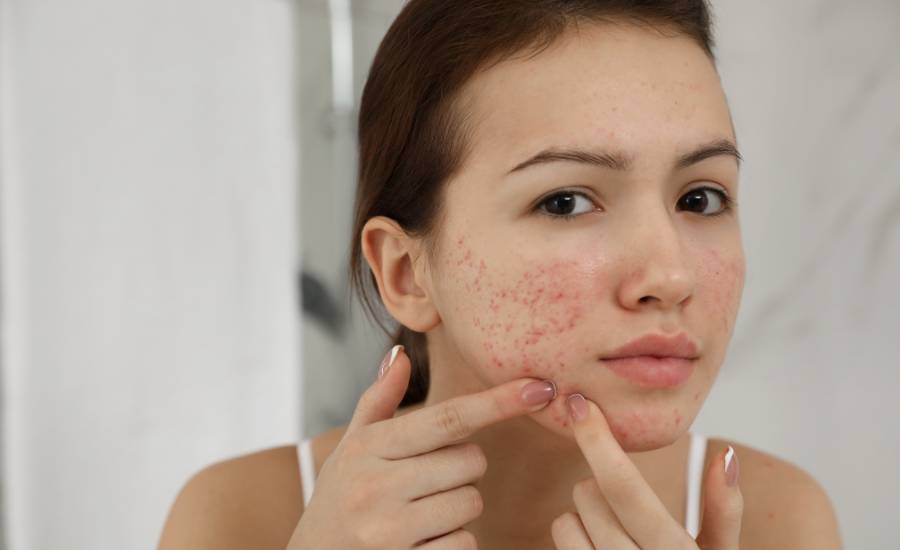
Acne is a disease of the pilosebaceous follicles. The sebaceous glands produce sebum to protect the skin. When they secrete too much—often under the influence of androgens—this thick sebum mixes with dead skin cells and clogs the pores. The bacterium Cutibacterium acnes (formerly Propionibacterium acnes ), naturally present on the skin, then proliferates in this anaerobic environment and triggers an inflammatory reaction: pimples appear.
To better understand the structure of the skin and the mechanisms that govern it, our article understanding the skin explains skin function in detail.
What are the different types of acne?
Acne manifests itself in different forms depending on its severity:
- Blackheads (open comedones): clusters of oxidized sebum visible on the surface of pores, mainly on the nose, forehead and chin.
- Whiteheads (closed comedones): blocked under the skin, they give a grainy appearance to the touch.
- Papules and pustules: red and inflamed bumps, sometimes topped with a purulent white spot.
- Nodules and cysts: deep, painful and hard lesions that can leave persistent scars if manipulated.
The most affected areas are the face, neck, back, and décolleté. Even after the spots have disappeared, red or hyperpigmented scars may persist for several months.
What are the causes of acne?
Hormones
This is the primary cause. Androgens (testosterone and its derivatives) stimulate sebum production. Hormonal fluctuations during adolescence, the menstrual cycle, pregnancy, or when stopping hormonal contraception are the most frequent triggers of adult acne in women.
Stress
Cortisol, released during stress, directly stimulates the sebaceous glands and promotes skin inflammation. The link between stress and acne breakouts is well-documented. To address this cause, our article on the effects of stress on the skin offers complementary approaches. Stress management also involves getting enough sleep—our article on the benefits of sleep for the skin shows how the quality of rest directly influences skin condition.
Food
Foods with a high glycemic index (refined sugars, white bread, sodas) cause insulin spikes that stimulate androgen production. Dairy products high in growth hormones can worsen acne in sensitive individuals. Conversely, omega-3 fatty acids (found in oily fish and flax seeds), antioxidants (found in colorful fruits and vegetables), and zinc help reduce inflammation and regulate sebum production.
External factors
Air pollution, excessive sweating, wearing a mask, friction from clothing, comedogenic or overly occlusive cosmetics can clog pores and trigger breakouts.
How to treat acne effectively?
1. Consult a dermatologist
For moderate to severe cases, a dermatological consultation is essential. The doctor may prescribe topical treatments (benzoyl peroxide, retinoids, topical antibiotics), oral antibiotics, or, for severe cases, isotretinoin (Roaccutane). These treatments are effective but can be irritating—they should be complemented by gentle skincare.
2. Adopt a suitable cleaning routine
Cleanse your skin morning and evening with a gentle cleanser, free of alcohol and harsh soaps. The goal is to remove sebum and impurities without damaging the protective hydrolipidic film. Avoid overly frequent scrubs (once a week maximum) and overly abrasive products that worsen inflammation. Never touch your pimples—direct contact spreads bacteria and promotes scarring.
3. Choosing the right skincare products
All products applied to acne-prone skin should be non-comedogenic. Regulating plant oils—such as jojoba, black cumin, and hazelnut—are better tolerated than cosmetics based on mineral oil or silicone. Niacinamide (vitamin B3) and azelaic acid are two particularly effective active ingredients for mild to moderate acne, available without a prescription. Zinc pyrithione, when used topically, reduces bacterial proliferation.
4. Protect yourself from the sun
Contrary to popular belief, sun exposure does not permanently improve acne. After an initial period of apparent dryness, the skin thickens (creating a "corneal" effect), pores become clogged, and breakouts return in the fall, often more severe. Use a light, non-comedogenic sunscreen with a minimum SPF of 30. For comprehensive advice on sun protection, our article "How to Protect Your Skin from the Sun" provides best practices.
5. The anti-inflammatory diet
Reducing refined sugars, ultra-processed foods, and cow's milk products can improve acne in sensitive individuals. Enrich your diet with zinc (oysters, pumpkin seeds, legumes), omega-3 fatty acids (sardines, mackerel, walnuts), vitamin A (carrots, sweet potatoes), and antioxidants. Zinc deserves special attention: an anti-inflammatory trace element and sebum regulator, it is one of the best-documented nutrients for combating acne. To learn more about its properties, our article on the health benefits of zinc provides a detailed explanation.
Frequently asked questions about acne
Is adult acne different from teenage acne?
Yes. Adult acne (after age 25) tends to affect the lower face (jawline, chin, neck) more often and is frequently linked to hormonal fluctuations during the menstrual cycle, contraception, or stress. It sometimes responds less well to conventional topical treatments and often requires a more targeted hormonal approach or stress management.
Is it possible to get rid of acne without medication?
For mild to moderate cases, yes. A gentle cleansing routine, non-comedogenic ingredients (niacinamide, azelaic acid, zinc), an anti-inflammatory diet, and stress management may be sufficient. For severe cases with nodules and cysts, dermatological treatment is necessary to prevent permanent scarring.
How long does it take to see results in acne treatment?
Skin renews itself approximately every 28 days. The first results of a treatment or a change in routine usually take 4 to 8 weeks to appear. Be patient and don't use multiple products at the same time—this makes it difficult to identify what works.