
Learning to recognize the nature of your hair (normal, oily, dry, damaged, fine or thick) and its type (straight, wavy, curly or frizzy) is the first step to providing it with truly appropriate care.
The different types of hair
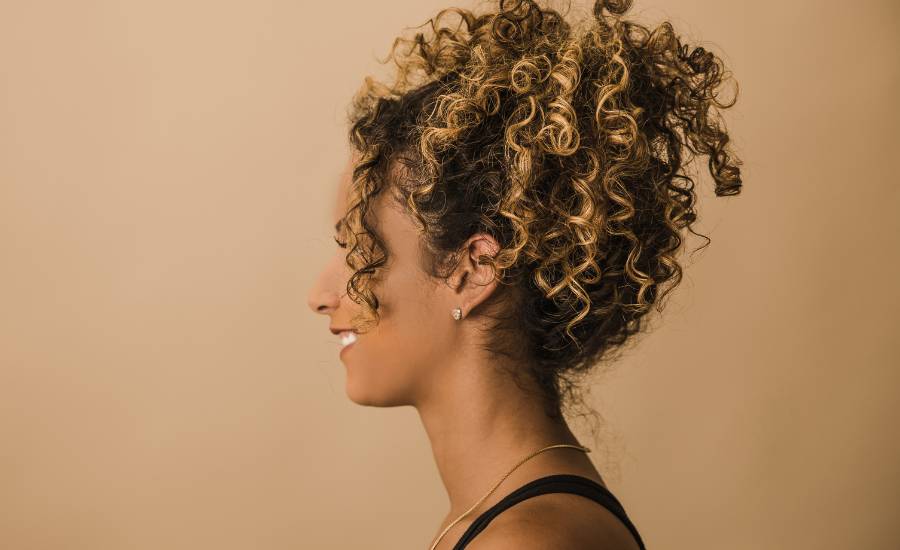
The nature of hair is not fixed: it can evolve according to lifestyle habits, environment and how hair is treated on a daily basis.
Normal hair
Normal hair is shiny, soft, and usually only gets greasy after a few days. It has the advantage of being easy to style and detangle, without requiring any special treatments.
Oily hair
Oily hair is characterized by an excessive production of sebum, which can promote the appearance ofdandruff . Several factors can explain this phenomenon: an unbalanced diet, unsuitable hair care products, stress, or hormonal fluctuations. Oily hair is generally recognizable by roots that quickly become greasy, often requiring daily washing.
Dry hair
Dry hair is characterized by a lack of shine and a rough texture. Unlike oily hair, it produces less sebum than necessary, making it brittle and less elastic. It tangles easily and can resemble straw. This phenomenon is often linked to environmental factors such as sun, sea salt, or pollution, or to certain hair care habits.
damaged hair
Damaged hair shares some characteristics with dry hair: it breaks easily and is difficult to detangle. At the level of the hair fiber, the cuticles are abnormally open, which considerably weakens the hair. The ends are often split , and the lengths tend to appear dull.
Fine hair
Fine hair is more fragile and damages more quickly. It also tends to get greasy faster than thick hair and often lacks volume, sometimes making it difficult to style for a bouffant effect.
Thick hair
Hair thickness is measured by its diameter, not by overall density or hair volume. Thick hair is generally more resistant to breakage, but can be more difficult to style and often requires specifically designed products and accessories.
The different types of hair

Hair type is determined by observing its general shape.
Straight or smooth hair
Straight hair is smooth, without any visible waves. Straight or smooth hair is generally shiny and easy to maintain on a daily basis.
Wavy hair
Wavy hair has an "S" shape and is often relatively fine. This type of hair is generally shiny and easy to style.
Curly hair
Curly hair can take many forms: a more pronounced "S" shape than wavy hair, or tighter, corkscrew-shaped curls. Some curly hair can have a texture similar to kinky hair.
curly hair
Kinky hair is characterized by very tight, spiral or "Z"-shaped curls, rather than the "S"-shaped curl of curly hair. This texture naturally tends to be drier and therefore requires special attention when it comes to hydration.
How to identify your hair type and texture?
Several simple tests, which can be done at home, allow you to refine your knowledge of your hair.
Determining the thickness of your hair
To assess the thickness of one's hair, a clean hair can be compared to a standard sewing thread approximately 15 cm long, laid side by side on a sheet of white paper. If the hair is thinner than the thread, it is considered fine; if it is thicker, it is considered thick; and if it has a similar thickness, it is considered medium.
Identifying hair porosity
Porosity refers to a hair's ability to absorb and retain moisture. To test it, simply place a clean strand of hair, free of product residue, in a transparent container of water and observe its behavior after a few minutes.
If the hair floats without sinking, the porosity is low: the cuticles are very tightly closed, water penetrates with difficulty, and drying is generally slow. If the hair stays in the middle of the container before gradually sinking, the porosity is medium, which generally corresponds to good moisture retention. If the hair sinks quickly to the bottom, the porosity is high: the cuticles are very open, water penetrates and evaporates quickly, which can explain a tendency towards dryness.
Check the elasticity of the hair
Elasticity indicates a hair's resistance to breakage. By holding a clean hair between your fingers at each end and gently pulling, you can observe its ability to stretch before breaking. A hair that stretches significantly before breaking is considered strong and elastic. A hair that stretches only slightly has average elasticity, while a hair that breaks immediately, without stretching, indicates low resistance and significant fragility.
Adapt your routine according to your hair type
Once you've identified your hair type and texture, choosing the right products becomes easier: shampoo, conditioner, mask, or treatment oil, depending on your specific hair needs. The choice of accessories (brush, comb) also plays a role in daily care. To delve deeper into long-term hair growth and health, our article on tips for promoting hair growth is a valuable complement to this approach.
Frequently Asked Questions
Can the nature of hair change over time?
Yes, hair type can change depending on age, hormonal fluctuations, environment, and the care provided. It's therefore helpful to regularly reassess your hair care routine.
Is it possible to have hair that is both oily and dry?
Yes, this is a common situation: the scalp can produce excess sebum at the root while the lengths and ends remain dry, especially in people with long or colored hair.
Is the sewing thread test reliable for determining hair thickness?
This test provides a simple and accessible indication, but it is best to perform it on several hairs from different areas of the scalp to obtain a more representative estimate of the entire head of hair.