
Losing 50 to 100 hairs a day is perfectly normal—it's part of the natural hair growth cycle. But when hair loss intensifies, when density visibly decreases, or when thinning patches appear, it's time to identify the causes and take action. Here's a comprehensive guide to understanding and preventing hair loss.
Why does hair fall out?
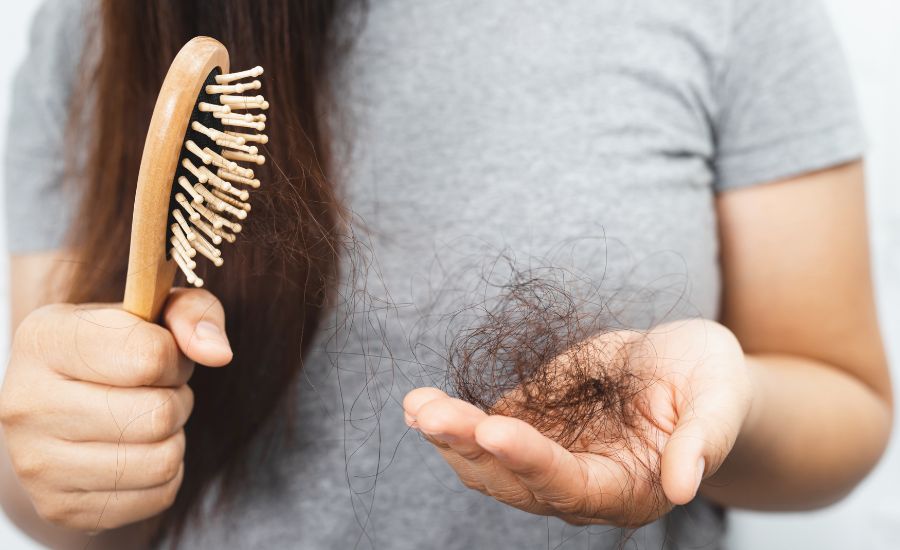
Hair follows a three-phase life cycle: the anagen phase (growth, 2 to 7 years), the catagen phase (resting, 2 to 6 weeks), and the telogen phase (shedding, 2 to 6 months). This cycle repeats 20 to 25 times during a lifetime. Hair loss becomes a concern when the duration of the anagen phase is abnormally short or when too many follicles simultaneously enter the telogen phase.
The main causes of excessive falls are:
Hormonal and genetic factors : Androgenetic alopecia (male pattern baldness) is the most common cause in men and also affects many women. It is linked to the sensitivity of hair follicles to dihydrotestosterone (DHT). Pregnancy, childbirth (postpartum telogen effluvium), menopause, and thyroid fluctuations are also common hormonal causes in women.
Chronic stress : An episode of intense or prolonged stress can cause telogen effluvium—a diffuse shedding of hair that occurs 2 to 3 months after the triggering event (emotional shock, burnout, illness). This phenomenon is generally reversible. To address the underlying cause, our article "How to Relieve Stress Naturally" offers practical approaches.
Nutritional deficiencies : a lack of iron (low ferritin), zinc, biotin (vitamin B8), vitamin D, or protein can disrupt keratin synthesis and accelerate hair loss. These deficiencies are often asymptomatic and only reveal themselves through blood tests.
Mechanical and thermal aggressions : repeated coloring, straightening, overly tight hairstyles (traction alopecia), excessive use of heating appliances, washing too frequently with hot water — all these factors weaken the cuticle and the roots.
Medications and medical treatments : chemotherapy, anticoagulants, certain antidepressants, hormonal treatments and medications for hypertension can cause a temporary or permanent drop depending on the molecules.
Daily steps to prevent hair loss
Several simple habits, applied regularly, can help preserve hair density and maintain a healthy scalp.
Diet is the primary factor. B vitamins (B6, B8, B12), iron, zinc, copper, and proteins rich in sulfur amino acids are the most important nutrients for hair health. Eggs, legumes, oily fish, nuts, pumpkin seeds, and leafy green vegetables are excellent sources. Hydration is also crucial: drinking 1.5 to 2 liters of water per day improves blood flow to the hair follicles. To learn more about zinc specifically, our article on the health benefits of zinc details its role in hair health.
Scalp massage , performed for 3 to 5 minutes daily with the fingertips, stimulates microcirculation in the scalp and improves nutrient delivery to the follicles. It's the simplest and most effective way to support the anagen phase. For more information on scalp care, our article "How to Care for Your Scalp" provides a complete routine.
The right washing routine : a gentle shampoo (pH 5.5, without harsh sulfates), with lukewarm water, two to three times a week maximum. A final rinse with cold water closes the cuticles and strengthens the hair fiber. Absolutely avoid very high-temperature drying and daily blow-drying.
Protective hairstyles : avoid tight ponytails, pulled-back buns, and overly tight braids worn daily. Traction alopecia is a common cause of hair loss in the temples and frontal areas. Opt for satin or fabric hair ties.
Essential oils such as rosemary (cineole type), Atlas cedarwood, and ginger, diluted in castor oil (known to stimulate microcirculation in the scalp), provide an effective natural treatment to strengthen roots and stimulate growth. Apply this blend with a scalp massage once a week before shampooing. For advice on the 5 best approaches to stimulate growth, see our article "5 Tips to Promote Hair Growth ."
Dietary supplements for hair loss
When diet alone is insufficient to address deficiencies, hair supplements can provide helpful support. The most effective nutrients for preventing hair loss are biotin (vitamin B8), zinc, vitamin D, iron (in cases of confirmed deficiency), selenium, and sulfur-containing amino acids (cysteine, methionine).
These supplements come in the form of capsules, tablets, ampoules, or gummies. Take them for a minimum of three months to assess their effectiveness—since hair growth is slow, results are only visible after several weeks. To compare the available options, our article on the best hair growth supplements analyzes the most effective formulas.
In cases of significant, persistent, or sudden hair loss, consult a dermatologist or general practitioner for a complete blood test (ferritin, TSH, zinc, vitamins). Targeted treatment of the underlying cause is always more effective than dietary supplements alone.
Frequently asked questions about hair loss
At what point should you start to worry about losing hair per day?
Losing 50 to 100 hairs a day is normal and part of the natural hair growth cycle. If you lose more than 150 to 200 hairs a day for an extended period (over 3 months), consult a doctor. A simple test: run your fingers through your dry hair and count the hairs that remain in your hand. More than 10 to 15 hairs is a sign to watch out for.
Is stress-related hair loss reversible?
Yes, in the vast majority of cases. Telogen effluvium linked to stress is a reversible phenomenon: the follicles are not destroyed, they simply enter a resting phase prematurely. Once the stressor is eliminated or controlled, regrowth resumes spontaneously within 3 to 6 months. To manage stress in the long term, our comprehensive guide to naturally reducing stress offers well-documented approaches.
Are hair gummies effective against hair loss?
Biotin, zinc, and B vitamin gummies can be effective in cases of confirmed deficiency in these nutrients. They are not a treatment for androgenetic alopecia or medical causes of hair loss. Their effectiveness depends on the underlying cause: if the hair loss is related to a biotin or zinc deficiency, supplementation will have a noticeable effect. In other cases, the improvement will be more limited.